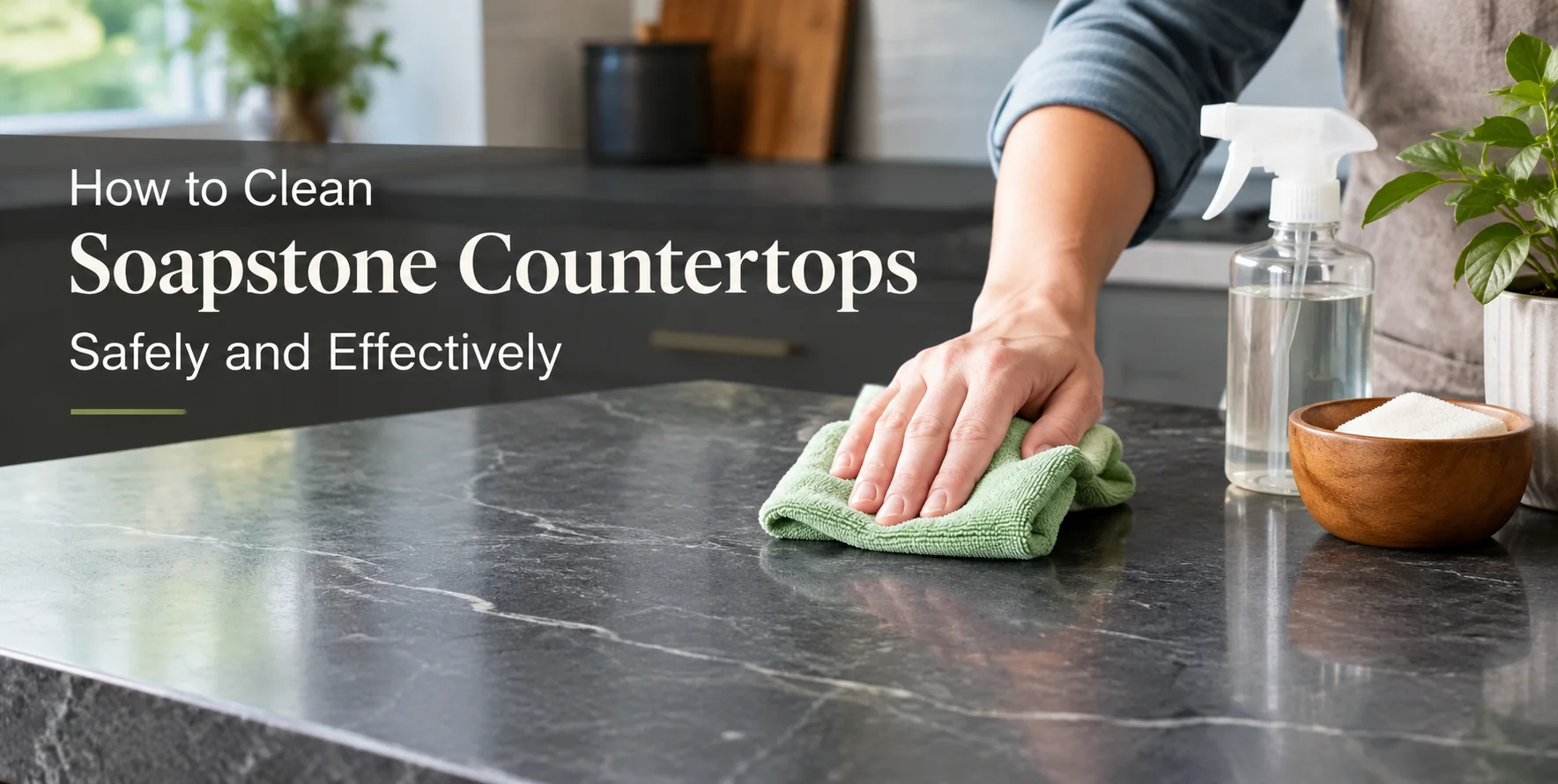
Soapstone countertops are valued for their smooth texture, natural appearance, durability, and resistance to heat. However, knowing How to Clean Soapstone Countertops correctly is important for keeping the surface attractive and well maintained. Unlike some countertop materials, soapstone does not require complicated cleaning products or harsh treatments. A simple routine using mild soap, warm water, and a soft cloth can usually handle everyday spills and residue.
Because soapstone is naturally nonporous, it does not absorb liquids easily. This makes it a practical choice for kitchens, bathrooms, laundry rooms, and other busy areas. Still, proper cleaning habits can help preserve its finish and prevent unnecessary scratches, stains, or dull-looking areas.
Why Proper Soapstone Cleaning Matters
Soapstone has a distinctive natural surface that can change in appearance over time. Its soft mineral composition means that while it is durable, it can also be more susceptible to scratches than harder stones such as granite or quartz.
Regular cleaning removes food particles, grease, dust, and other residues before they build up. More importantly, using the right cleaning method helps protect the countertop from unnecessary wear.
The Natural Characteristics of Soapstone
Soapstone is primarily composed of talc, magnesium, and other minerals. Its composition gives it a naturally smooth and somewhat soft feel.
Unlike porous stones, soapstone generally does not need a conventional sealant to prevent liquid absorption. This characteristic makes routine maintenance relatively simple.
However, the surface can develop small scratches through normal use. Many homeowners appreciate these marks because they contribute to soapstone’s evolving, natural character. If desired, minor scratches can often be blended or treated separately.
Soapstone Countertop Cleaning Guide
The best approach to How to Clean Soapstone Countertops starts with simple supplies and gentle techniques. You do not need an aggressive chemical cleaner for everyday maintenance.
| Cleaning Need | Recommended Method | Important Tip |
|---|---|---|
| Daily dust and crumbs | Soft microfiber cloth | Wipe gently without abrasive pressure |
| Food spills | Warm water and mild dish soap | Clean spills soon after they occur |
| Grease | Mild dish soap and warm water | Use a soft cloth rather than a rough sponge |
| Dried residue | Damp cloth and mild soap | Let the moisture loosen the residue first |
| Stubborn marks | Gentle soap solution | Avoid harsh scouring products |
| Scratches | Light sanding or suitable soapstone treatment | Follow the countertop manufacturer’s guidance |
| Routine maintenance | Warm water and mild cleaner | Avoid unnecessary chemical treatments |
This simple approach is usually enough to keep a soapstone countertop clean and attractive.
How to Clean Soapstone Countertops Step by Step
Cleaning soapstone does not have to be complicated. Following a consistent process can help maintain its natural appearance without putting unnecessary stress on the surface.
1. Remove Loose Debris
Begin by clearing the countertop of dishes, appliances, utensils, crumbs, and other objects. Use a dry microfiber cloth to remove loose dust and particles.
This first step matters because rubbing dry debris across the surface can create unnecessary friction.
2. Prepare a Mild Cleaning Solution
Fill a bowl or sink with warm water and add a small amount of mild dish soap. You only need enough soap to create a gentle cleaning solution.
Avoid using excessive detergent. Too much soap can leave a film that makes the countertop appear cloudy or sticky.
3. Wipe the Countertop
Dip a soft microfiber cloth into the solution and wring it out so it is damp rather than soaking wet.
Wipe the countertop using gentle, overlapping movements. Pay special attention to areas around sinks, cooking zones, food preparation spaces, and frequently touched sections.
4. Remove Soap Residue
After cleaning, use another clean, damp cloth to wipe away leftover soap. This helps prevent a dull residue from developing on the surface.
A final wipe with a dry microfiber towel can also help the countertop look clean and polished.
5. Dry the Surface
Although soapstone is highly resistant to liquid absorption, drying the surface after cleaning is still a useful habit. It removes remaining moisture and gives you an opportunity to notice any spots that need additional attention.
Cleaning Soapstone After Food and Grease Spills
Kitchen countertops often encounter oil, sauces, coffee, juice, and other substances. The good news is that soapstone’s nonporous nature makes it relatively forgiving.
For fresh spills, wipe the area with a damp cloth as soon as practical. If grease remains, use a small amount of mild dish soap with warm water.
Dealing With Dried-On Food
Do not immediately reach for a rough scrubber when food dries on the countertop. Instead, place a damp cloth over the residue for several minutes.
The moisture can help soften the material. Once loosened, gently wipe it away with a microfiber cloth.
For particularly persistent residue, repeat the process instead of applying excessive force.
Products to Avoid on Soapstone Countertops
Choosing the right cleaning products is just as important as choosing the right technique. Strong chemicals may be unnecessary for routine soapstone care.
Avoid abrasive powders, aggressive scouring pads, and harsh cleaning chemicals unless the countertop manufacturer specifically recommends them.
You should also be cautious with products marketed as heavy-duty stone cleaners. Not every stone-cleaning product is appropriate for every type of stone.
Why Abrasive Cleaners Can Be a Problem
Soapstone is relatively soft compared with many other countertop materials. Abrasive cleaners can therefore create unwanted surface marks or change the texture of the stone.
A gentle cleaner is usually the smarter choice for everyday maintenance.
How to Handle Scratches on Soapstone
One of the most important things to understand about soapstone is that scratches can occur. This does not necessarily mean the countertop has been damaged beyond repair.
Small scratches can sometimes be blended into the surrounding surface. Depending on the depth and location, light sanding may be an option.
Minor Scratches
For a very small surface mark, homeowners sometimes use fine-grit sandpaper designed for appropriate stone applications. The area should be treated carefully so the surrounding finish remains consistent.
If you are unsure about the correct technique, professional advice is preferable to experimenting on a visible countertop area.
Deeper Scratches
Deep scratches may require more careful restoration. Sanding too aggressively can create an uneven patch that stands out from the rest of the countertop.
For significant damage, consult the countertop installer, fabricator, or manufacturer for the recommended repair method.
Maintaining the Natural Appearance of Soapstone
Cleaning is only one part of maintaining soapstone. The appearance of the material can naturally evolve with age and use.
Some owners choose to apply mineral oil or a manufacturer-approved soapstone treatment to deepen the color and create a more uniform appearance. Others prefer the untreated look and allow the stone to develop naturally.
The right choice depends on the finish you prefer and the recommendations provided for your particular countertop.
Consistency Is More Important Than Excessive Cleaning
Soapstone does not need aggressive daily treatment. A simple routine is generally more beneficial than frequent deep cleaning.
Wipe spills, remove food residue, clean regularly, and avoid unnecessary chemicals. These habits can keep the countertop looking attractive for years.
Common Mistakes When Cleaning Soapstone
Even a durable countertop can suffer from poor cleaning habits. Avoiding a few common mistakes can make maintenance easier.
- Using abrasive scrubbers: Rough materials can leave unwanted marks on the relatively soft surface.
- Applying too much cleaner: Excess soap may create a dull or sticky residue.
- Ignoring spills for long periods: Although soapstone is nonporous, prompt cleaning keeps the surface fresh and hygienic.
- Using random chemical products: Some formulas may be unnecessarily harsh for natural stone.
- Scrubbing aggressively: Excessive pressure can create uneven wear or make minor scratches more noticeable.
How Often Should You Clean Soapstone Countertops?
For a busy kitchen, wiping the surface after food preparation is a practical habit. A more thorough cleaning can be performed whenever the countertop develops visible residue or buildup.
There is no need to use strong chemicals simply because a countertop is cleaned frequently. Mild soap and warm water are generally sufficient for routine maintenance.
High-use areas around sinks, cooktops, and food preparation zones may need attention more often than less-used sections.
Tips for Long-Term Soapstone Care
A thoughtful maintenance routine can protect the appearance and functionality of your countertop.
Keep Cleaning Simple
The simplest approach is often the most effective. Mild dish soap, warm water, and a soft cloth can handle most everyday messes.
Use Cutting Boards
Although soapstone is durable, it is not an ideal cutting surface. Using a cutting board helps prevent scratches and protects both the countertop and your knives.
Use Appropriate Heat Protection
Soapstone has excellent heat resistance, but using trivets or heat pads can still be a sensible habit when handling extremely hot cookware.
Clean Spills Promptly
Soapstone is naturally resistant to staining because it is nonporous, but wiping spills promptly keeps the surface cleaner and reduces residue.
Follow Manufacturer Recommendations
Different soapstone products can have different finishes and care recommendations. If your countertop came with specific maintenance instructions, those should take priority over general cleaning advice.
Frequently Asked Questions
Can I use dish soap on soapstone countertops?
Yes. Mild dish soap mixed with warm water is commonly suitable for routine soapstone cleaning.
Does soapstone need to be sealed?
Generally, soapstone does not require sealing because it is naturally nonporous. However, follow the recommendations for your specific countertop.
Can soapstone countertops scratch?
Yes. Soapstone is relatively soft, so scratches can occur. Minor scratches may often be blended or repaired.
Can I use vinegar to clean soapstone?
It is better to avoid relying on acidic cleaners for routine care. Mild soap and warm water provide a simpler cleaning option.
How can I make soapstone look darker?
Some owners use mineral oil or a recommended soapstone treatment to enhance the stone’s darker appearance. Always check the manufacturer’s guidance first.
Final Thoughts
Learning How to Clean Soapstone Countertops is much easier when you focus on gentle, consistent care rather than complicated products. Warm water, mild dish soap, and a soft microfiber cloth are usually enough to handle everyday dirt, food residue, and grease.
The key is to avoid unnecessary abrasion and harsh chemicals. Because soapstone is naturally nonporous and durable, it can provide a practical and attractive countertop surface with relatively simple maintenance.
Small scratches and changes in appearance are also part of soapstone’s natural character. With sensible cleaning habits, prompt spill removal, appropriate tools, and careful maintenance, your countertop can remain functional and beautiful while developing its own distinctive appearance over time.





One thought on “How to Clean Soapstone Countertops: Safely and Effectively”