
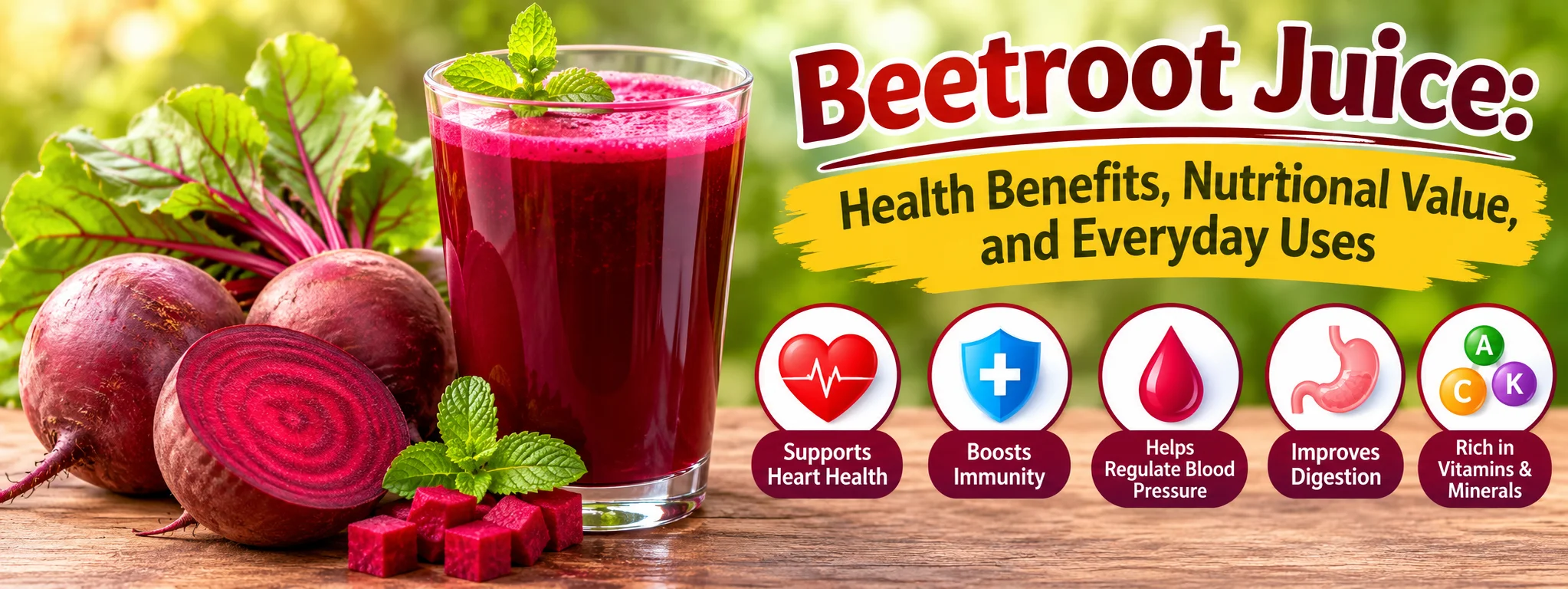
Beetroot juice is a colorful vegetable drink recognized for its earthy taste, natural sweetness, and valuable plant compounds. It contains dietary nitrates and antioxidant pigments that have attracted attention in nutrition and fitness research. Whether prepared at home, purchased in a bottle, or enjoyed as a concentrated drink, beetroot juice offers several ways to add vegetables to an everyday diet.
From pure beetroot juice to combinations with apple, carrot, ginger, and citrus fruits, there are different varieties to explore. Some people enjoy it as a refreshing beverage, while others are interested in its possible effects on circulation and exercise performance.
Understanding Beetroot Juice and Its Popular Varieties
Beetroot juice is produced by extracting liquid from fresh red beets. Its distinctive flavor is earthy, mildly sweet, and slightly rich. It can be served on its own or mixed with fruits and other vegetables to create a different taste.
One difference between whole beetroot and its juice is fiber content. When beets are strained during preparation, much of the vegetable’s fiber remains in the solid pulp. The liquid still contains naturally occurring compounds, including betalain pigments and dietary nitrates.
Common Types of Beetroot Juice
| Juice Variety | Description | Typical Serving |
|---|---|---|
| Fresh Beetroot Juice | Prepared by extracting juice from fresh red beets | 150–250 ml |
| Organic Beet Juice | Made from organically cultivated beetroot | 150–250 ml |
| Beetroot and Carrot Juice | Combines beetroot with naturally sweet carrots | 200–250 ml |
| Beetroot and Apple Juice | A fruit-based blend with a sweeter flavor | 200–250 ml |
| Beetroot Ginger Juice | Includes ginger for a stronger taste | 150–200 ml |
| Beetroot Lemon Juice | Combines beetroot with fresh lemon | 150–200 ml |
| Beetroot Concentrate | A concentrated product used according to its label | Product-dependent |
| Beetroot Juice Shot | A smaller serving of concentrated juice | 60–70 ml |
These are common ways of preparing or selling beetroot juice. Exact ingredients and serving sizes depend on the recipe, manufacturer, or juice shop.
Beetroot Juice Products and Prices
Beetroot juice is available in supermarkets, health food stores, and online shops. Products differ in bottle size, ingredients, production methods, and packaging. Some contain only beetroot, while others include fruit juices or additional plant ingredients.
Pure Beetroot Juice Options
| Product Name | Package Size | Listed Price (USD) | Product Description |
| Great Value Organic 100% Beet Juice | 32 fl oz | From $5.83 | Organic beetroot beverage |
| Pure Anatolia Organic Red Beet Juice | 32 fl oz | $6.97 | Organic red beet juice |
| Biotta Beet Juice | 16.9 fl oz | $7.29 | Bottled beetroot juice |
| Lakewood Organic Pure Beet Juice | 32 fl oz | $6.99 | Organic pure beet juice |
| R.W. Knudsen Family Organic Beet Juice Blend | 32 oz | From $6.94 | Organic beet juice blend |
Beetroot Juice Blends
| Product Name | Package Size | Listed Price (USD) | Product Description |
| Lakewood Organic Beet, Ginger and Turmeric Juice | 32 oz | $8.99 | Beetroot with ginger and turmeric |
| SMART JUICE Organic Berry Beet | 32 fl oz | $8.39 | Berry and beetroot combination |
| Natalie’s Orange Beet Juice | 12 fl oz | $4.49 | Orange and beet juice blend |
| Sofresco Beetroot Cold Pressed Juice | 12 fl oz | $4.49 | Cold-pressed beetroot beverage |
Beetroot Concentrate Products
| Product Name | Package Size | Listed Price (USD) | Product Description |
| Dynamic Health Organic Beetroot Juice Concentrate | 32 fl oz | $19.49 | Concentrated beetroot product |
| Dynamic Health Organic Beet Juice | 16 fl oz | $17.81 | Organic beet juice |
2. May Contribute to Exercise Performance
Beetroot juice has become popular among people interested in physical activity because dietary nitrates may help the body use oxygen more efficiently during certain types of exercise.
Research has examined its potential effects on activities such as:
- Cycling
- Running
- Swimming
- Rowing
- Other endurance-based exercise
Some studies have reported improvements in exercise performance, but findings vary depending on the activity, individual, and amount of nitrate consumed.
3. Contains Naturally Occurring Antioxidants
The rich red color of beetroot comes partly from betalains, a group of natural plant pigments.
These compounds have antioxidant properties. Antioxidants help protect cells from oxidative stress as part of the body’s normal processes.
Beetroot also contains other plant compounds that contribute to its nutritional profile.
4. Offers Another Way to Include Vegetables
Drinking beetroot juice can be one way to add vegetables to an eating routine. It can be enjoyed with breakfast, alongside lunch, or as part of a snack.
However, juice does not provide the same amount of fiber as whole beetroot, particularly when it has been strained. Eating whole vegetables alongside drinking juice can help provide a wider range of nutrients.
5. May Support Cardiovascular Wellness
Dietary nitrates in beetroot juice have been studied for their relationship with blood vessel function and blood pressure.
Although the research is interesting, beetroot juice should not be considered a guaranteed way to prevent heart disease or treat cardiovascular conditions. Overall eating habits, physical activity, and appropriate medical care remain important.
Beetroot Juice Nutrition Facts
The nutritional profile of beetroot juice depends on the preparation method, serving size, beet variety, and additional ingredients.
For example, pure beetroot juice may have a different nutritional composition from a blend containing apple, orange, or other fruits. Products with added ingredients can also differ in their sugar and calorie content.
A 150 ml serving of beetroot juice contains approximately 10 grams of naturally occurring sugar, according to the British Heart Foundation. The exact amount can vary.
Important Nutrients and Plant Compounds
| Nutrient or Compound | Role in the Body |
|---|---|
| Carbohydrates | Provide energy |
| Natural Sugars | Contribute to the drink’s sweetness |
| Dietary Nitrates | Can be converted into nitric oxide |
| Betalains | Natural pigments with antioxidant properties |
| Potassium | Helps support normal muscle and nerve function |
| Folate | Contributes to normal cell growth and development |
| Vitamin C | Supports normal immune system function when present in meaningful amounts |
| Water | Helps contribute to daily fluid intake |
For precise information about calories, carbohydrates, protein, sodium, and other nutrients, check the label on the specific product. Concentrates and fruit-based blends may have different nutritional values from pure beetroot juice.
Different Ways to Enjoy Beetroot Juice
Beetroot juice can be prepared in several ways. Its earthy flavor pairs well with certain fruits, vegetables, and seasonings.
Beetroot Juice With Breakfast
A small serving can be enjoyed alongside a regular breakfast. Mixing beetroot with apple or carrot can create a milder, sweeter flavor.
Beetroot Juice Before Physical Activity
Some exercise studies have examined beetroot juice consumption before endurance activities. The timing and amount used in research can differ, and the nitrate content of commercial products is not always the same.
There is no need to consume large quantities or follow an athletic research protocol as a daily routine. Anyone considering concentrated products should check the label and seek professional advice when appropriate.
Beetroot Juice With Lunch
Beetroot juice can accompany a balanced lunch that includes vegetables, whole grains, and protein. A smaller serving may be a convenient choice for people who find its flavor strong.
Beetroot and Fruit Combinations
Apple, orange, and berries can be mixed with beetroot to create different flavors. These ingredients provide natural sweetness, although combining several fruit juices can increase the total sugar content.
Popular Beetroot Juice Flavor Combinations
Different ingredients can change the taste and texture of beetroot juice. The following combinations are simple preparation ideas rather than confirmed products from a particular juice business.
| Combination | Main Ingredients | Flavor Profile | Classic Beet | Beetroot | Earthy and naturally sweet | Apple Beet | Beetroot and apple | Fruity and mild | Citrus Beet | Beetroot and orange | Sweet and tangy | Ginger Beet | Beetroot and ginger | Strong and slightly spicy | Lemon Beet | Beetroot and lemon | Tart and refreshing | Vegetable Blend | Beetroot and carrot | Mild and naturally sweet |
|---|
People can adjust these combinations according to their taste preferences. Checking ingredients is especially important when buying prepared drinks.
Important Considerations Before Drinking Beetroot Juice
Beetroot juice can fit into a balanced eating routine, but drinking more does not necessarily provide greater benefits. Portion size and individual health needs should be considered.
Here are some useful points to understand:
- Natural sugar content: Beetroot juice contains naturally occurring sugars. Check serving sizes and product labels, especially when choosing fruit blends.
- Lower fiber than whole beets: Strained juice contains less fiber than the original vegetable.
- Changes in urine color: Beetroot pigments can sometimes produce pink or reddish urine. This effect is often harmless, but unexplained or persistent discoloration should be discussed with a healthcare professional.
- Blood pressure considerations: People taking blood pressure medication should ask a healthcare professional before regularly consuming concentrated beetroot products.
- Oxalate content: Beetroot contains oxalates, which may matter for people who are prone to certain types of kidney stones.
People with medical conditions, dietary restrictions, or specific nutritional needs should seek individualized guidance before making concentrated beetroot products a regular habit.
Factors That Affect Beetroot Juice Prices
The cost of beetroot juice depends on several product and retail factors. Freshly prepared drinks may have different prices from packaged beverages, while organic products and concentrated varieties can cost more.
Important pricing factors include:
- Ingredient quality: Organic or specially sourced beetroot may affect production costs.
- Bottle size: Larger packages often have a higher total price.
- Preparation method: Cold-pressed and specially processed beverages may cost more.
- Additional ingredients: Blends containing fruits, ginger, or turmeric may have different prices.
- Packaging and storage: Bottles, processing, and shelf-life requirements can influence the final retail cost.
- Retailer and location: Store promotions, availability, and regional pricing can change the amount customers pay.
Comparing the price per serving can help shoppers understand which product offers better value.
Frequently Asked Questions About Beetroot Juice
1. What is beetroot juice made from?
Beetroot juice is prepared by extracting liquid from fresh or processed red beets. Some varieties contain only beetroot, while others combine it with ingredients such as apple, carrot, ginger, or lemon.
2. How much does packaged beetroot juice cost?
Prices depend on the brand, bottle size, ingredients, and retailer. The examples listed in this guide range from approximately $4.49 for smaller bottles to $19.49 for a concentrated product.
3. What makes beetroot juice popular?
Its natural nitrate content, antioxidant plant pigments, distinctive flavor, and possible effects on circulation and exercise performance have made it popular among health-conscious consumers.
4. Is beetroot juice suitable for everyday consumption?
Moderate amounts may fit into many people’s eating routines. However, natural sugar content, serving size, medical conditions, and individual dietary requirements should be considered.
5. Is fresh beetroot juice different from bottled juice?
Fresh juice can be prepared with ingredients chosen at home, while bottled products offer convenience and may have a longer shelf life. Their nutritional values can differ, so checking product labels is helpful.
Final Thoughts
Beetroot juice is a versatile vegetable beverage available in several forms, from freshly extracted drinks to organic bottles, fruit blends, and concentrated products. Its natural nitrates and antioxidant compounds have made it a subject of interest in nutrition and exercise research.
When choosing beetroot juice, consider the ingredients, serving size, nutritional label, and product price. Freshly prepared and packaged options can both be convenient choices, depending on personal preferences.
Including beetroot juice as part of a varied diet can add another vegetable-based option to everyday meals. The best approach is to enjoy it in sensible portions, maintain balanced eating habits, and consider individual health needs.