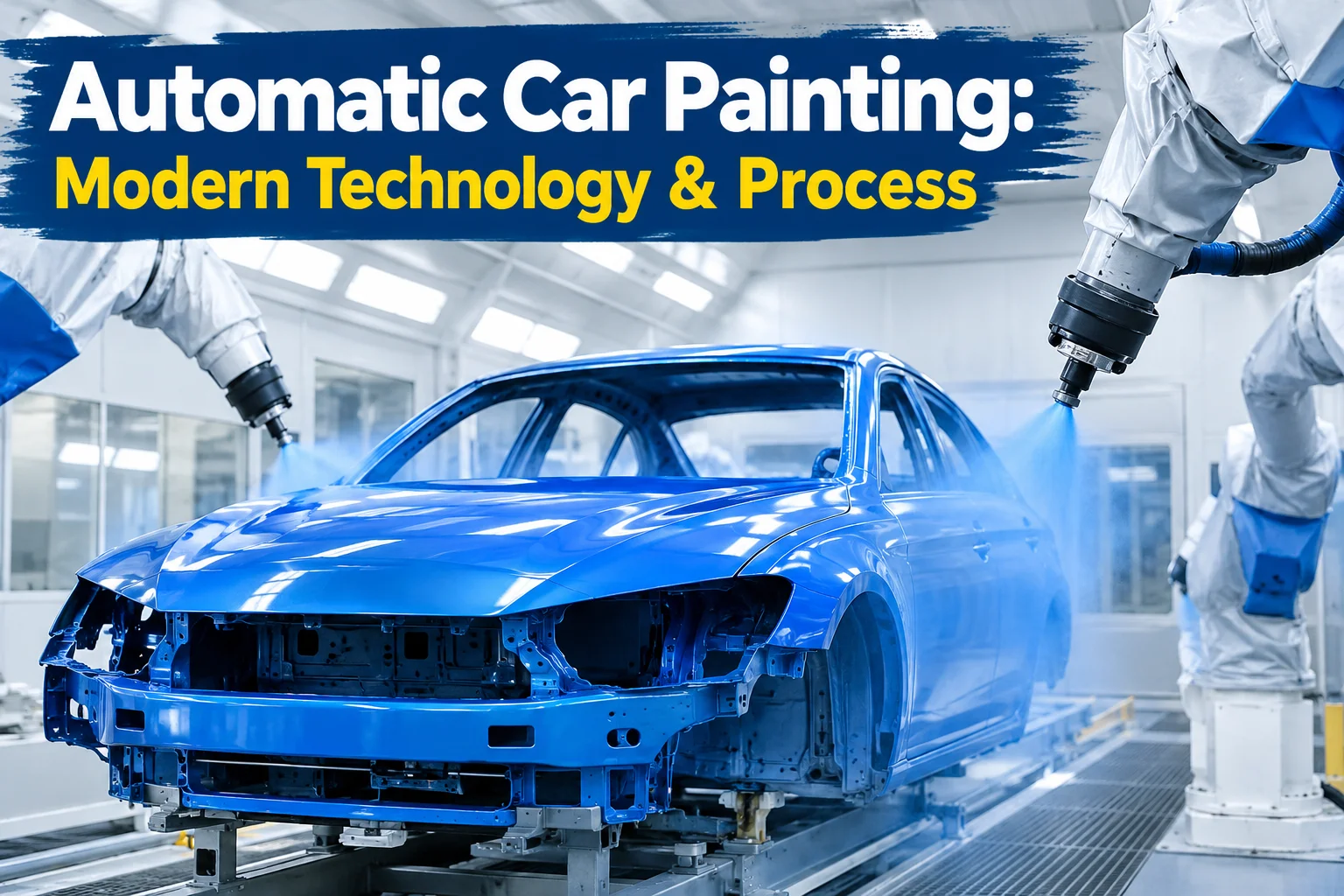
Automatic Car Painting: Modern Technology & Process has transformed the way vehicles receive professional paint finishes. Instead of relying entirely on manual spraying, modern automotive facilities use automated equipment, robotic arms, advanced spray systems, sensors, and controlled paint booths to achieve a consistent surface. This technology can improve efficiency, reduce material waste, and create a smooth, attractive finish when properly managed.
Modern car painting combines mechanical precision with carefully controlled environmental conditions. From surface preparation to final inspection, every stage matters. A high-quality finish depends not only on the painting equipment but also on preparation, paint selection, temperature, humidity, curing, and quality control.
How Automatic Car Painting Technology Works
Automatic painting systems are designed to control the movement and application of paint with impressive accuracy. Robotic equipment can follow programmed paths around a vehicle, helping distribute paint evenly across panels, curves, edges, and difficult areas.
Robotic Spray Systems
Robotic spray arms are among the most important technologies in automated vehicle painting. They can move through predefined patterns while maintaining a controlled distance from the vehicle surface.
The system can regulate spray speed, direction, and paint flow. This consistency helps reduce uneven coverage and can create a more uniform appearance across different panels.
Sensors and Digital Controls
Modern facilities may use sensors and computer-controlled systems to monitor important painting conditions. These controls can help operators manage spray pressure, paint quantity, booth conditions, and robotic movement.
Digital programming also allows manufacturers and repair facilities to repeat specific painting processes. This repeatability is especially valuable when large numbers of vehicles require similar finishes.
The Automatic Car Painting Process
The complete process involves several carefully coordinated stages. Automation can improve the spraying stage, but preparation and finishing remain equally important.
1. Vehicle Surface Preparation
Before paint is applied, the vehicle must be thoroughly cleaned and prepared. Dirt, grease, old paint problems, rust, and surface imperfections can affect the final result.
Technicians may sand damaged areas, repair dents, apply suitable primers, and clean the surface. A properly prepared panel provides a stronger foundation for the paint layers.
2. Priming the Surface
Primer creates an important connection between the vehicle surface and the paint system. It can improve adhesion while helping protect the underlying material.
In automated facilities, primer application may also be performed with controlled spray equipment. The objective is consistent coverage without unnecessary buildup.
3. Basecoat Application
The basecoat provides the vehicle’s primary color. Automated spray systems can distribute the coating across panels according to programmed patterns.
Robotic application can be particularly useful for maintaining consistent movement. This helps minimize variations that may occur when spraying large surfaces manually.
4. Clearcoat Application
Clearcoat provides a protective outer layer and contributes to the final gloss and visual depth. Depending on the paint system, several factors must be carefully controlled during this stage.
A properly applied clearcoat can produce a smooth, impressive finish while helping protect the underlying color from everyday environmental exposure.
5. Curing and Drying
After painting, the coating must cure properly. Modern paint facilities may use controlled heating systems, airflow, and specialized curing equipment.
The correct curing process allows the coating to develop its intended properties. Poorly controlled drying can affect appearance, durability, and surface quality.
Key Benefits of Automated Car Painting
Automation offers several important advantages for automotive manufacturers and professional repair facilities.
- Consistent application: Robotic systems can repeat programmed spray patterns with high precision.
- Improved efficiency: Automated equipment can reduce the time required for certain production stages.
- Reduced material waste: Controlled paint delivery can help limit unnecessary overspray.
- Better working conditions: Automation can reduce the amount of repetitive spraying performed directly by workers.
- Reliable quality control: Digital systems make it easier to monitor and repeat standardized processes.
Automatic vs. Manual Car Painting
Both automated and manual painting have important applications. Automated systems are especially useful in high-volume environments where consistency and speed are major priorities.
Manual painting, however, still has an important role in specialized repair work. Experienced technicians can make adjustments based on unusual body shapes, localized damage, custom colors, or complex restoration requirements.
| Feature | Automatic Painting | Manual Painting |
|---|---|---|
| Application | Robotic or automated spray systems | Human-operated spray equipment |
| Consistency | Highly repeatable | Depends on technician skill |
| Production speed | Generally faster for repeated jobs | Often slower |
| Material control | Computer-controlled systems can improve efficiency | Depends on spraying technique |
| Custom work | Suitable with proper programming | Highly flexible |
| Best use | High-volume and standardized work | Repairs, restoration, and specialized jobs |
Advanced Technology Behind Modern Car Painting
The automotive painting industry continues to evolve through smarter equipment and improved coating technology.
Artificial Intelligence and Automation
Some modern manufacturing environments are moving toward increasingly intelligent systems. Data can be collected during production and analyzed to identify irregularities or improve process settings.
Future systems may become better at recognizing panel shapes and automatically adjusting spraying patterns. This could make automated painting even more precise and adaptable.
Electrostatic Painting
Electrostatic technology can improve paint transfer efficiency by using electrical charges to help paint particles move toward the vehicle surface. This approach can reduce unnecessary overspray and improve coverage.
It is particularly valuable in controlled manufacturing environments where material efficiency and repeatability are important.
Environmentally Conscious Paint Systems
Modern automotive facilities are also exploring coatings and processes designed to reduce environmental impact. Water-based paints and improved transfer technologies can help lower emissions and reduce waste compared with some older systems.
Better ventilation, filtration, and paint recovery systems can further support cleaner production environments.
Factors That Affect Paint Quality
Even the most advanced automatic equipment cannot compensate for poor preparation or incorrect settings. Several factors influence the final appearance.
Temperature and Humidity
Paint behaves differently under varying environmental conditions. Temperature and humidity can affect drying, curing, flow, and surface appearance.
Controlled paint booths help maintain suitable conditions throughout the process.
Spray Distance and Speed
The distance between the spray equipment and vehicle surface is important. Incorrect positioning can cause uneven coverage, excessive paint buildup, or insufficient coating.
Automated systems help maintain programmed movement and distance, supporting a more consistent finish.
Paint Compatibility
Primer, basecoat, and clearcoat must be compatible with one another. Using an unsuitable combination can create adhesion problems or affect the final appearance.
Professional facilities therefore follow specific coating systems and manufacturer recommendations.
Maintenance and Quality Inspection
Automatic painting equipment requires regular maintenance to remain effective. Spray nozzles, robotic arms, sensors, filters, ventilation systems, and paint delivery components should be inspected according to manufacturer requirements.
After painting, technicians may inspect the vehicle under controlled lighting. They can look for uneven coverage, dust particles, color differences, surface imperfections, or other issues.
A final inspection is essential because automation improves consistency but does not eliminate the need for skilled human oversight.
Choosing the Right Automatic Painting System
The ideal system depends on the facility’s size, production volume, vehicle types, coating requirements, and available budget. A large manufacturing plant may require sophisticated robotic cells, while a smaller repair facility may benefit from semi-automated equipment.
Important considerations include:
- Production capacity
- Paint transfer efficiency
- Booth size and ventilation
- Robotic flexibility
- Maintenance requirements
- Compatibility with modern coatings
A carefully selected system can deliver long-term efficiency while supporting impressive finish quality.
Frequently Asked Questions:
1. Is automatic car painting better than manual painting?
It can provide greater consistency and efficiency, especially for repeated production work.
2. Does automated painting reduce paint waste?
Yes, controlled spraying can improve transfer efficiency and reduce unnecessary overspray.
3. Can robots paint different car colors?
Yes. Automated systems can be programmed for different colors and coating processes.
4. How long does automated car painting take?
The time varies according to the vehicle, coating system, preparation, and curing requirements.
5. Does automatic painting require human workers?
Yes. Skilled workers are still needed for preparation, programming, monitoring, inspection, and maintenance.
Final Thoughts
Automatic Car Painting: Modern Technology & Process represents a powerful shift toward precision, efficiency, and repeatable automotive finishing. Robotic spray equipment, digital controls, advanced curing systems, and improved coatings have made vehicle painting more controlled than ever.
However, successful results still depend on careful preparation, correct paint selection, environmental control, equipment maintenance, and professional inspection. Automation provides the technology, while skilled specialists ensure that the process delivers the desired result.