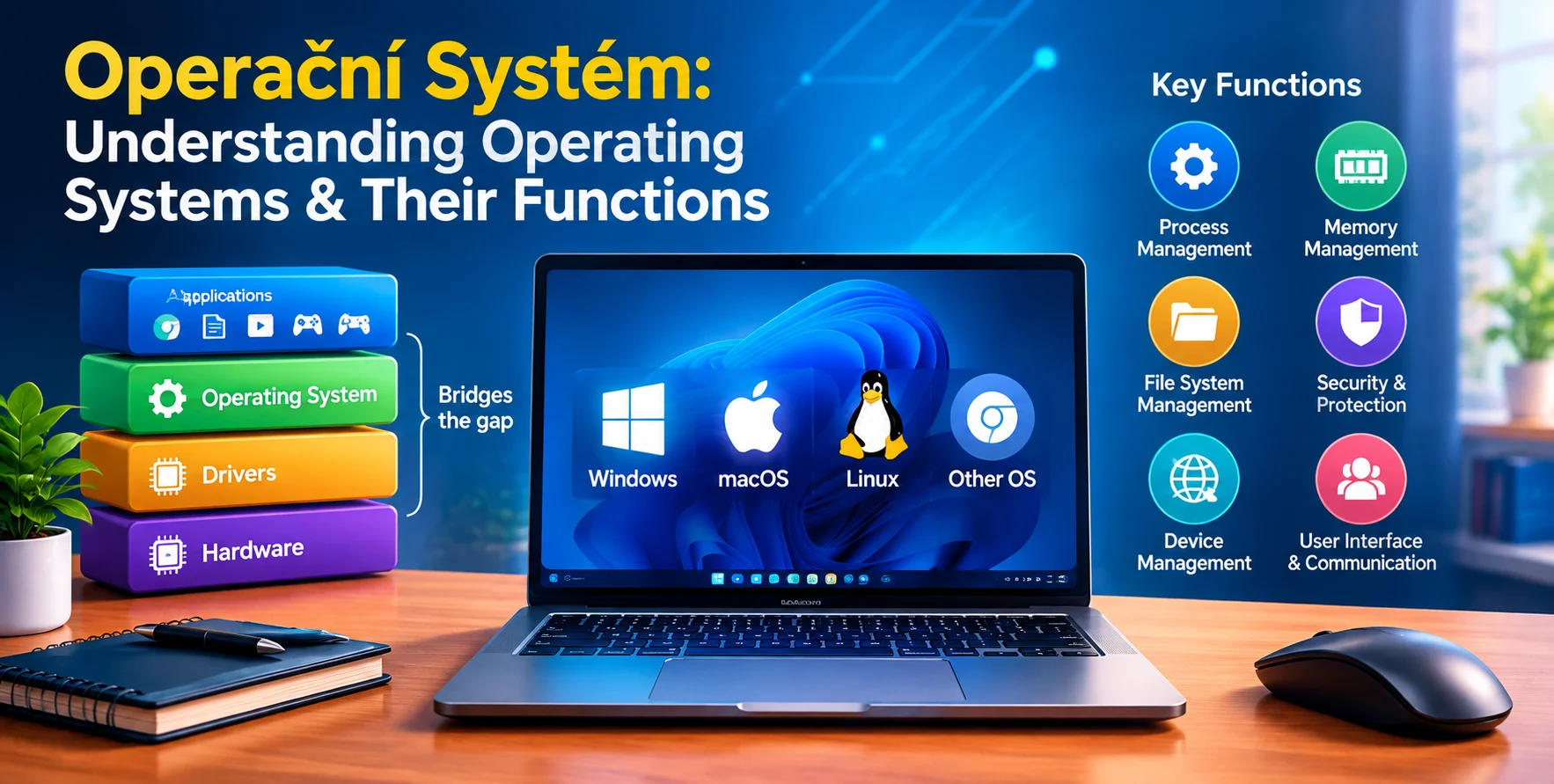
Operační Systém: Understanding Operating Systems & Their Functions
Modern computers, smartphones, tablets, and many digital devices rely on software that manages hardware, applications, files, and everyday tasks. The Operační Systém is the central software layer that makes this possible. It creates a practical connection between the physical components of a device and the programs people use every day. Without an operating system, using a computer would be far more complicated because users would need to communicate with hardware directly.
An operating system manages resources such as the processor, memory, storage, and connected devices. It also provides an environment where applications can run smoothly and securely. Whether someone is browsing the web, editing a document, playing a game, managing files, or communicating online, the operating system works behind the scenes to coordinate these activities.
The Core Role of an Operační Systém
An operating system acts as a manager between computer hardware and software. Hardware components can perform specific operations, but applications need a structured way to use those components. The operating system provides that structure.
For example, when a user opens a photo-editing application, the operating system helps allocate memory, provide access to storage, communicate with the display, and manage input from the keyboard or mouse. Several different processes may happen simultaneously, but the operating system coordinates them so the device remains responsive.
This management role is one of the most important reasons operating systems are essential to modern technology.
Managing Hardware Resources
Every computer contains limited resources. A processor can execute only a certain number of instructions at a time, while memory and storage also have finite capacity. The operating system decides how these resources are assigned.
Important resources include:
- CPU: Handles calculations and instructions required by applications.
- RAM: Temporarily stores information needed by active programs.
- Storage: Keeps applications, documents, photos, and other files.
- Input devices: Include keyboards, mice, touchscreens, microphones, and cameras.
- Output devices: Include displays, speakers, printers, and external screens.
By coordinating these components, the operating system helps applications work together without constantly interfering with one another.
Operační Systém Functions at a Glance
The Operační Systém performs many functions that users may never notice. These functions are important for stability, performance, security, and usability.
| Function | What It Does | Why It Matters |
|---|---|---|
| Process Management | Controls running programs and tasks | Helps applications run efficiently |
| Memory Management | Allocates and releases RAM | Prevents unnecessary resource conflicts |
| File Management | Organizes files and folders | Makes data easier to store and access |
| Device Management | Communicates with hardware devices | Allows peripherals to work correctly |
| Security | Controls access and permissions | Protects data and system resources |
| User Interface | Provides graphical or command-based interaction | Makes the device easier to operate |
| Networking | Manages network connections and communication | Enables internet and local network access |
| System Updates | Helps install improvements and security fixes | Supports stability and protection |
These functions work together rather than operating as isolated features. A strong operating system balances usability, performance, compatibility, and security.
Process and Memory Management
One of the most demanding responsibilities of an operating system is managing active processes and memory. Modern users often run several applications at the same time, such as a browser, music player, messaging application, and document editor.
Process Management
A process is a program or task that is currently being executed. The operating system determines how processor time is distributed among active processes.
This allows multiple applications to appear to run simultaneously. The operating system rapidly manages processor access, prioritizing tasks when necessary and keeping processes separated.
Good process management can improve responsiveness and prevent one application from unnecessarily taking control of the entire system.
Memory Management
RAM provides temporary workspace for active programs. When an application starts, the operating system assigns it memory. When the application closes, that memory can be released and reused.
Memory management is especially important when several demanding programs are open. An efficient system attempts to use available memory effectively while maintaining stability.
File and Storage Management
Another essential responsibility of an Operační Systém is organizing information stored on a device. Users interact with files constantly, even if they do not think about the underlying processes.
The operating system provides structures for creating, copying, moving, renaming, deleting, and opening files. It also manages folders and permissions.
Organizing Digital Information
A logical file structure helps users locate information quickly. Documents can be grouped into folders, photographs can be separated by project or event, and applications can store their required data in appropriate locations.
The operating system also communicates with storage devices such as solid-state drives, hard drives, memory cards, and external drives.
File Permissions
File permissions determine who can access or modify particular resources. This is especially important on systems used by multiple people or connected to networks.
Permissions can restrict actions such as reading, editing, deleting, or executing files. These controls contribute to system security and help protect important information.
Device Management and Drivers
Computers communicate with many different hardware devices. A printer, graphics adapter, keyboard, wireless adapter, or audio device may require specific software instructions to operate correctly.
The operating system manages these relationships through device management and, in many cases, drivers.
Why Drivers Matter
A driver allows the operating system to communicate with a particular hardware component. When a new device is connected, the system may identify it and load the appropriate software needed for communication.
Reliable driver support can improve compatibility and performance. Outdated or incorrect drivers, on the other hand, may contribute to errors or hardware problems.
This is why system updates and compatible device software are important parts of maintaining a healthy computer.
User Interfaces and Everyday Interaction
An operating system needs to provide a practical way for people to control a device. This is usually achieved through a graphical user interface, a command-line interface, or both.
Graphical User Interface
A graphical interface uses elements such as windows, icons, menus, buttons, and pointers. It allows users to perform common tasks without memorizing commands.
This approach makes computers more accessible to beginners and supports efficient everyday work.
Command-Line Interface
A command-line interface allows users to interact with a system by entering text commands. It is particularly valuable for administrators, developers, technicians, and advanced users.
Command-based interaction can provide precise control and make repetitive operations easier to automate.
Security and Access Control
Security has become one of the most important responsibilities of modern operating systems. Devices contain valuable information, including personal documents, photographs, credentials, and application data.
An operating system can provide several layers of protection.
These may include user accounts, authentication, permissions, application controls, system updates, encryption support, and security monitoring.
Protecting System Resources
Access controls can prevent unauthorized users or applications from modifying important system components. Separating ordinary user activity from administrative privileges can reduce the impact of accidental or malicious changes.
Regular updates are also essential because software developers continually address newly discovered security weaknesses.
Networking and Communication
Modern devices rarely operate in complete isolation. Computers and smartphones connect to Wi-Fi networks, local networks, mobile networks, and other digital services.
The operating system manages important networking functions, including communication between applications and network hardware.
It can help applications establish connections, exchange information, and interact with network resources. Network configuration tools also allow users to manage connections and troubleshoot communication problems.
Different Types of Operating Systems
Operating systems are designed for different environments. Although their underlying responsibilities can overlap, their priorities may vary depending on the device.
Desktop Operating Systems
Desktop systems are designed for personal computers and workstations. They usually emphasize multitasking, graphical interfaces, application compatibility, file management, and peripheral support.
Mobile Operating Systems
Mobile systems are optimized for smartphones and tablets. They place strong emphasis on touch interaction, battery efficiency, application permissions, wireless communication, and device security.
Server Operating Systems
Server systems are designed to provide services to other computers or devices. They may prioritize reliability, networking, storage management, security, and the ability to handle many simultaneous connections.
Embedded Operating Systems
Embedded systems are found inside devices such as appliances, vehicles, industrial equipment, and specialized electronics. These systems may be designed for specific tasks and often operate with limited hardware resources.
Why Operating System Performance Matters
A device’s performance is influenced by many factors, including hardware specifications, software design, available memory, storage technology, and system configuration. The operating system plays an important role in coordinating these elements.
A well-managed system can respond quickly, allocate resources efficiently, and maintain stability during demanding workloads.
However, an operating system cannot overcome every hardware limitation. If a computer has insufficient memory or an aging processor, software optimization may help but cannot completely eliminate the underlying limitation.
Keeping an Operating System Reliable
Regular maintenance can help an operating system remain stable and secure. Users should pay attention to system notifications and recommended updates.
Useful maintenance practices include:
- Install trusted operating system updates when they become available.
- Keep important applications compatible with the current system.
- Remove unnecessary software and files when storage becomes limited.
- Use strong account protection and appropriate permissions.
- Back up important personal files regularly.
These simple habits can support better performance and reduce avoidable problems.
The Future of Operating Systems
Operating systems continue to evolve as computing changes. Cloud services, artificial intelligence, connected devices, stronger security requirements, and new hardware architectures are influencing modern system design.
Future operating systems are likely to focus even more heavily on security, automation, energy efficiency, privacy, and seamless communication between devices.
Artificial intelligence may also become increasingly integrated into system-level features, helping users manage files, configure settings, identify problems, and automate routine activities. At the same time, privacy and responsible data management will remain critical considerations.
Frequently Asked Questions
1. What does Operační Systém mean?
Operační Systém is the Czech term for operating system, the core software responsible for managing a device’s hardware and software resources.
2. What is the main function of an operating system?
Its main function is to manage hardware and software resources while providing an environment where applications can operate.
3. Can a computer work without an operating system?
A computer can technically perform certain low-level operations without a conventional operating system, but normal modern computing requires system software to manage hardware and applications.
4. Why are operating system updates important?
Updates can improve performance, compatibility, functionality, and security while addressing software weaknesses and system problems.
5. Is an operating system only used on computers?
No. Operating systems are also used in smartphones, tablets, servers, vehicles, industrial equipment, smart devices, and many other digital systems.
Final Thoughts
An Operační Systém is much more than the interface users see on a screen. It is the essential software layer that coordinates processors, memory, storage, applications, hardware devices, networks, and security controls.
From opening a simple document to managing complex digital infrastructure, operating systems perform countless tasks behind the scenes. Understanding their functions makes it easier to appreciate how modern technology works and how different devices manage their resources.
As computing continues to develop, operating systems will remain a critical foundation for digital experiences. Their future will likely bring smarter automation, stronger security, better efficiency, and increasingly seamless interaction between people, applications, and connected devices.




One thought on “Operační Systém: Understanding Operating Systems & Their Functions”