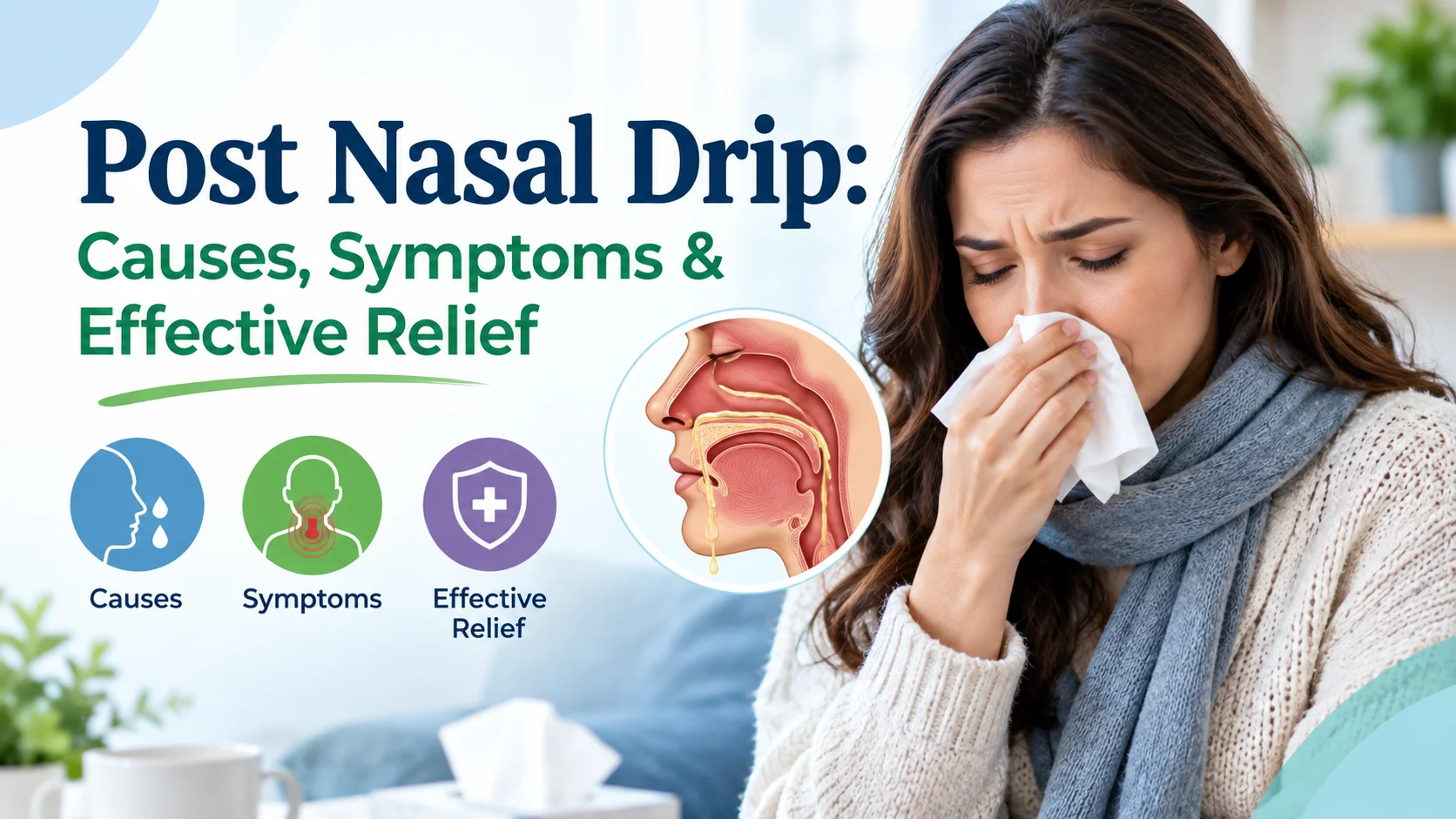
Post Nasal Drip is a common condition in which mucus from the nose or sinuses moves down the back of the throat. Although mucus production is a normal part of the body’s defense system, excess mucus or changes in its consistency can become uncomfortable. It may create a constant need to clear the throat, cause coughing, or leave a feeling of something stuck in the throat.
Post Nasal Drip can develop for several reasons, including allergies, colds, sinus problems, environmental irritants, and changes in weather. Understanding the possible causes and symptoms can help you choose appropriate relief strategies and recognize when professional medical advice may be needed.
Common Causes of Post Nasal Drip
Several conditions can increase mucus production or change how mucus drains through the nose and throat.
Allergies and Seasonal Changes
Allergic reactions are a frequent cause of excessive mucus. Pollen, dust, pet dander, and other allergens can irritate the nasal passages. The body responds by producing more mucus, which may eventually drain toward the throat.
Seasonal changes can also affect symptoms. Some people notice increased congestion and throat irritation during particular times of the year.
Colds and Respiratory Infections
A common cold can cause temporary nasal congestion and increased mucus. As the infection improves, mucus may continue draining into the throat for several days.
Other respiratory infections can produce similar symptoms. Persistent or worsening symptoms may require medical evaluation, especially when accompanied by significant breathing problems or a high fever.
Sinus Problems
Sinus inflammation can interfere with normal mucus drainage. When the nasal passages become swollen, mucus may accumulate and gradually move toward the throat.
Sinus-related Post Nasal Drip can sometimes occur with facial pressure, congestion, reduced sense of smell, or thick nasal discharge.
Environmental Irritants
Smoke, strong fragrances, air pollution, dry air, and chemical fumes may irritate the nasal passages. Reducing exposure to these triggers can help decrease irritation and mucus production.
Symptoms of Post Nasal Drip
Post Nasal Drip can feel different from one person to another. The symptoms often depend on the underlying cause and how much mucus is present.
Common signs include:
- Frequent throat clearing
- A sensation of mucus running down the throat
- Coughing, especially at night
- Scratchy or irritated throat
- Hoarseness or changes in the voice
Some people may also experience bad breath, nasal congestion, or a feeling of pressure around the nose and face.
How Post Nasal Drip Affects Daily Life
Although Post Nasal Drip is often not serious, ongoing symptoms can become frustrating. Repeated throat clearing may irritate the throat further, creating a cycle of discomfort.
Nighttime symptoms can also interfere with comfortable sleep. Lying down may make drainage feel more noticeable, particularly when nasal congestion is present.
People who speak frequently for school, work, or other activities may notice that throat irritation and hoarseness make communication more difficult.
Effective Relief Strategies
Treatment depends largely on the underlying reason for the mucus and drainage. Simple measures may provide meaningful relief for mild symptoms.
Stay Hydrated
Drinking enough fluids can help keep mucus from becoming excessively thick. Warm liquids may also provide temporary soothing comfort for an irritated throat.
Use Saline Nasal Rinses
Saline sprays or rinses can help moisturize the nasal passages and remove mucus, allergens, and irritants. If using a nasal rinse, use sterile, distilled, or appropriately treated water and follow the product instructions carefully.
Manage Allergy Triggers
If allergies are contributing to Post Nasal Drip, reducing exposure to known triggers can help. Keeping living spaces clean, limiting exposure to smoke, and following an appropriate allergy-management plan may reduce symptoms.
Improve Indoor Air Quality
Dry indoor air can irritate the nose and throat. A clean humidifier may help add moisture when the air is particularly dry. It is important to maintain the device properly because poorly cleaned humidifiers can introduce unwanted contaminants into the air.
Adjust Sleeping Habits
Elevating the head slightly while sleeping may make nighttime drainage more comfortable. Good sleep habits can also support recovery when symptoms are related to a temporary illness.
Post Nasal Drip and Acid Reflux
Not every sensation of throat mucus is caused by nasal drainage. Acid reflux can sometimes cause throat irritation, coughing, hoarseness, or a lump-like sensation.
When symptoms continue despite addressing nasal congestion or allergies, reflux may be worth discussing with a healthcare professional. The correct treatment depends on the underlying cause.
Post Nasal Drip Relief at a Glance
| Cause or Trigger | Common Symptoms | Helpful Approach |
|---|---|---|
| Allergies | Sneezing, congestion, drainage | Reduce allergen exposure |
| Common cold | Mucus, cough, sore throat | Rest and hydration |
| Sinus inflammation | Pressure, congestion, thick mucus | Saline care and medical guidance when needed |
| Dry air | Throat irritation, thick mucus | Increase appropriate indoor moisture |
| Environmental irritants | Coughing, congestion | Avoid smoke and strong fumes |
When to Seek Medical Advice
Occasional Post Nasal Drip often improves as its underlying cause resolves. However, persistent or severe symptoms should not be ignored.
Consider speaking with a healthcare professional if symptoms last for an extended period, repeatedly return, or significantly interfere with sleep and daily activities.
Medical advice is particularly important when drainage is accompanied by severe facial pain, significant breathing difficulty, persistent high fever, unexplained weight loss, or other unusual symptoms.
A healthcare professional can examine the nose, throat, and sinuses and determine whether allergies, infection, reflux, medication effects, or another condition may be contributing.
Prevention Tips
Preventing Post Nasal Drip completely is not always possible, but several practical habits may lower the chance of recurring irritation.
- Wash hands regularly during cold and flu seasons.
- Avoid cigarette smoke and unnecessary exposure to strong fumes.
- Keep frequently used indoor spaces reasonably clean.
- Drink enough fluids throughout the day.
- Identify and manage personal allergy triggers.
Frequently Asked Questions
Can Post Nasal Drip cause coughing?
Yes. Mucus draining into the throat can irritate the tissues and trigger coughing, particularly when lying down.
How long can Post Nasal Drip last?
Its duration depends on the cause. Symptoms linked to a cold may improve as the infection resolves, while allergy-related symptoms can continue when triggers remain present.
Is Post Nasal Drip contagious?
Post Nasal Drip itself is not contagious. However, an underlying cold or respiratory infection causing the drainage may be contagious.
Can allergies cause Post Nasal Drip?
Yes. Allergies can increase mucus production and nasal inflammation, making drainage into the throat more noticeable.
When should I see a doctor?
Seek professional advice when symptoms are persistent, severe, repeatedly returning, or accompanied by concerning symptoms such as significant breathing difficulty or severe pain.
Final Thoughts
Post Nasal Drip can be uncomfortable, but understanding its potential triggers makes it easier to manage. Allergies, colds, sinus inflammation, dry air, and environmental irritants are among the common factors that can increase nasal drainage.
Simple measures such as hydration, saline nasal care, avoiding irritants, and managing allergies may provide effective relief for many people. However, persistent or unusual symptoms deserve professional attention because the underlying cause may require specific treatment.
The most effective approach is to focus on the reason behind the drainage rather than simply treating the sensation in the throat. With the right habits and appropriate medical guidance when necessary, many people can reduce discomfort and return to normal daily activities.





One thought on “Post Nasal Drip: Causes, Symptoms & Effective Relief”