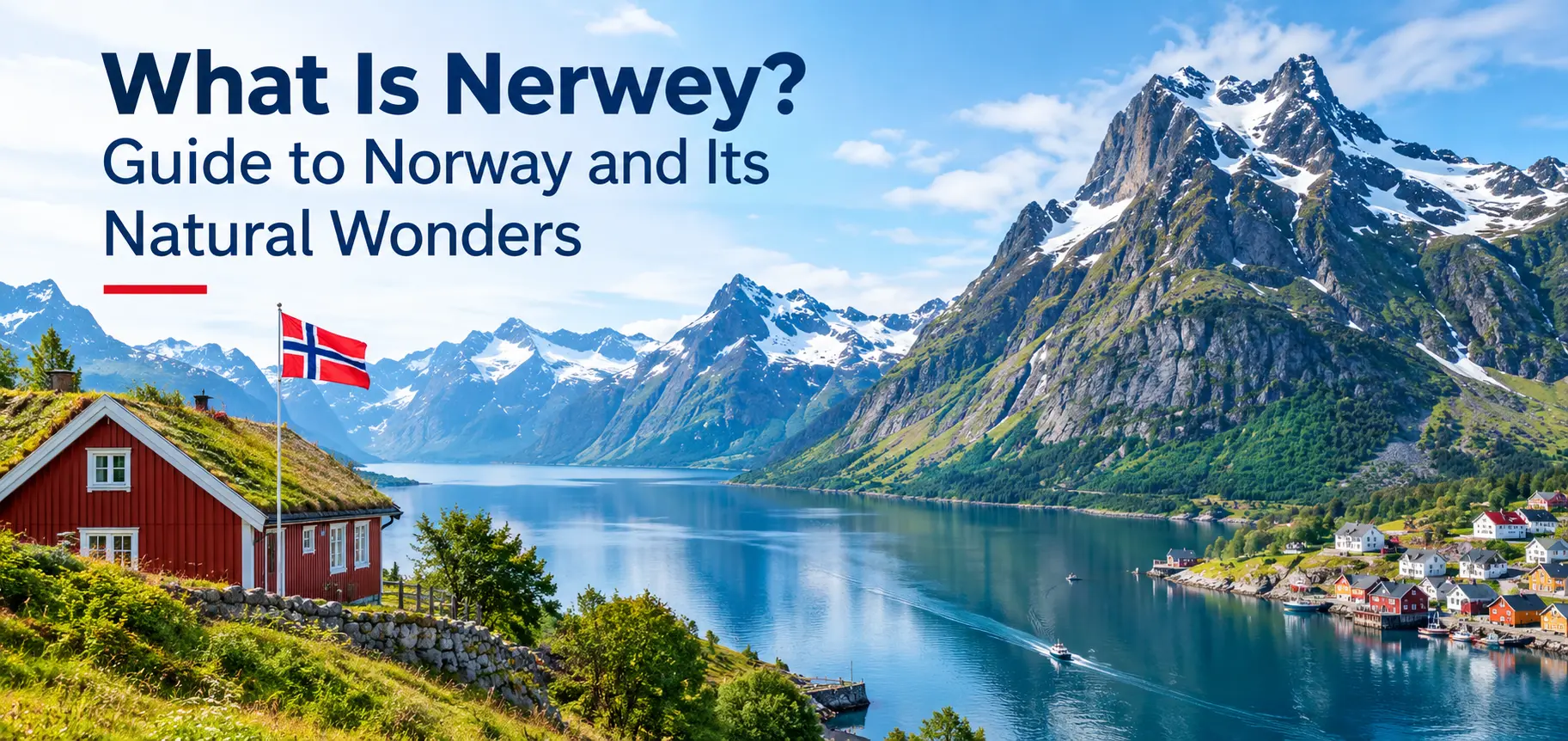
If you have searched for What Is Nerwey, you may have come across a spelling variation of Norway, the beautiful Nordic country known for dramatic fjords, snow-covered mountains, colorful northern lights, peaceful villages, and remarkable coastal landscapes. While “Nerwey” is not the standard English name of a country, many online searches may use the term when referring to Norway.
Norway is one of Europe’s most visually stunning destinations. From the lively streets of Oslo and Bergen to the remote beauty of the Lofoten Islands, the country offers an impressive mix of nature, culture, history, adventure, and modern living.
Its appeal goes far beyond scenic photographs. Norway gives travelers opportunities to explore glaciers, waterfalls, fjords, Arctic landscapes, forests, islands, and mountains while also experiencing traditional food and local culture.
Whether you are planning a trip or simply trying to understand the term What Is Nerwey, this guide explores Norway’s identity, natural wonders, famous destinations, activities, seasons, and practical travel ideas.
What Is Nerwey? Understanding the Name
The keyword What Is Nerwey appears to be a spelling variation or typo for “What is Norway?” The correct English spelling is Norway.
Norway is officially known as the Kingdom of Norway. It is located in Northern Europe and forms part of Scandinavia. The country shares borders with Sweden, Finland, and Russia and has a long coastline facing the North Atlantic Ocean and Norwegian Sea.
Norway is especially famous for its relationship with nature. Mountains, deep coastal inlets, islands, waterfalls, forests, and Arctic environments shape much of the country’s character.
The name Norway itself is associated with the country, while “Nerwey” is not a standard geographical name. Therefore, if you encounter the phrase online, it is generally useful to consider whether the writer or searcher intended to say Norway.
Norway at a Glance
| Feature | Details |
|---|---|
| Official name | Kingdom of Norway |
| Region | Northern Europe |
| Capital | Oslo |
| Main language | Norwegian |
| Currency | Norwegian krone (NOK) |
| Famous for | Fjords, mountains, northern lights, coastal scenery |
| Popular destinations | Oslo, Bergen, Tromsø, Lofoten, Stavanger |
Why Norway Is Famous Around the World
Norway has developed a powerful reputation as a destination for travelers who enjoy spectacular landscapes. Its geography creates experiences that are difficult to find in one place elsewhere.
One of the country’s defining features is its fjords. These long, narrow bodies of water are surrounded by steep cliffs and mountains. Many were shaped over thousands of years by glaciers.
Norway is also famous for the Northern Lights, particularly in northern regions. During suitable conditions, visitors may see green, purple, pink, or white light moving across the night sky.
The country also has a strong outdoor culture. Hiking, skiing, kayaking, fishing, cycling, boating, and scenic road trips are popular ways to experience the landscape.
For people interested in history, Norway offers Viking heritage, traditional fishing communities, historic buildings, museums, and long-standing maritime traditions.
Norway’s Most Beautiful Natural Wonders
The Norwegian Fjords
The fjords are among Norway’s most recognizable natural attractions.
Sognefjord, often called Norway’s longest and deepest fjord, stretches through a spectacular landscape of mountains, waterfalls, villages, and valleys. The surrounding area provides opportunities for hiking, boating, sightseeing, and photography.
Geirangerfjord is another famous destination. Its steep mountains and waterfalls create an unforgettable landscape, particularly when viewed from the water or surrounding viewpoints.
Nærøyfjord is known for its narrow shape and dramatic scenery. It can be included in several popular routes through western Norway.
Fjord travel is not simply about seeing water between mountains. It is about experiencing a landscape where nature dominates the horizon.
The Northern Lights
The Northern Lights, or aurora borealis, are among Norway’s most magical natural attractions.
They are particularly associated with northern areas such as Tromsø, Alta, Senja, and the Lofoten Islands. The phenomenon occurs when charged particles from the sun interact with Earth’s atmosphere.
Seeing the aurora requires darkness, suitable weather, and favorable solar conditions. Because nature controls the display, no tour can guarantee a spectacular show.
That uncertainty is part of the excitement. Standing beneath a clear Arctic sky while colorful lights appear overhead can become one of the most memorable moments of a journey.
Lofoten Islands
The Lofoten Islands offer an extraordinary combination of mountains, beaches, fishing villages, and Arctic scenery.
The islands are located above the Arctic Circle and are known for dramatic peaks rising near the sea. Small communities, traditional fishing structures, and colorful buildings add character to the landscape.
Lofoten is attractive in both summer and winter. During brighter months, long daylight hours create excellent opportunities for hiking and photography. Winter can bring snow-covered mountains and opportunities to search for the Northern Lights.
Trolltunga
Trolltunga, meaning “Troll’s Tongue,” is one of Norway’s most recognizable hiking locations.
The rock formation extends dramatically over a mountain landscape, creating a spectacular viewpoint. Reaching it requires a serious hike, so visitors should prepare carefully and consider weather conditions.
The experience is especially rewarding for travelers who enjoy challenging outdoor adventures and dramatic scenery.
Preikestolen
Preikestolen, also known as Pulpit Rock, is another famous Norwegian viewpoint.
It rises high above Lysefjord and provides an impressive panorama of the surrounding mountains and water.
The hike is popular because it offers a dramatic reward without requiring the same extreme commitment as some of Norway’s longer mountain routes. Still, suitable footwear, weather awareness, water, and preparation are important.
Cities Worth Exploring in Norway
Norway is not only about wilderness. Its cities combine modern design, history, food, art, and easy access to nature.
Oslo
Oslo is Norway’s capital and a natural starting point for many international visitors.
The city offers museums, parks, waterfront areas, restaurants, galleries, and cultural attractions. Its modern architecture blends with forests, hills, and the Oslofjord.
Visitors can enjoy a city break while remaining close to outdoor experiences.
Bergen
Bergen is often considered an important gateway to western Norway’s fjords.
The city is known for its historic atmosphere, colorful wooden architecture, surrounding mountains, and access to famous fjord destinations.
Walking around the old harbor area, exploring local streets, and taking mountain or fjord excursions can make Bergen an excellent part of a Norwegian itinerary.
Tromsø
Tromsø is especially popular among travelers interested in Arctic experiences.
It is a major northern destination for Northern Lights tours, winter activities, whale watching, and outdoor adventures.
The city also provides access to nearby mountains and fjords, making it possible to combine cultural experiences with nature.
Best Things to Do in Norway
Norway works well for travelers with very different interests. You do not need to be an experienced adventurer to enjoy the country.
Here are five experiences worth considering:
- Explore a Norwegian fjord by boat and admire the surrounding cliffs, waterfalls, and villages.
- Search for the Northern Lights during a clear Arctic night.
- Hike to famous viewpoints such as Trolltunga or Preikestolen with proper preparation.
- Explore the fishing villages, beaches, and mountains of the Lofoten Islands.
- Ride a scenic railway or drive through Norway’s remarkable mountain and coastal landscapes.
Best Time to Visit Norway
The best time to visit Norway depends on the type of experience you want.
Summer
Summer offers long days and excellent conditions for many outdoor activities. Hiking trails become more accessible, and northern areas can experience exceptionally long daylight.
This season is ideal for road trips, hiking, sightseeing, kayaking, and exploring coastal communities.
Autumn
Autumn brings colorful forests and a quieter atmosphere in many destinations. Northern Norway can also become attractive for early Northern Lights opportunities as darkness returns.
The changing landscape creates excellent photography conditions.
Winter
Winter transforms many parts of Norway into a snowy wonderland.
Northern regions become particularly attractive for travelers interested in aurora hunting, dog sledding, skiing, snowshoeing, and Arctic experiences.
However, winter conditions can affect transportation and outdoor activities, so flexible planning is important.
Spring
Spring brings longer daylight, changing weather, melting snow, and increasingly accessible outdoor areas.
It can be a rewarding period for visitors who want a balance between winter scenery and the beginning of warmer-season activities.
Norwegian Culture and Lifestyle
Norwegian culture has a strong connection with nature.
Outdoor recreation is deeply important, and many people enjoy spending time hiking, skiing, walking, camping, or simply relaxing in natural surroundings.
Norway also has a rich maritime history. Fishing communities have shaped coastal life for generations, while Viking history remains an important part of the country’s cultural identity.
Food is another interesting part of the experience. Seafood, fish, dairy products, bread, berries, and locally sourced ingredients appear in many traditional and modern dishes.
Norwegian cities also have strong art, architecture, music, and design scenes, giving visitors plenty to explore when the weather is less suitable for outdoor activities.
Travel Tips for First-Time Visitors
Norway can be an expensive destination, so creating a realistic travel budget before arriving is useful.
Transportation should also be planned according to the region you want to visit. Norway is geographically large, and trying to cover too much territory during one short trip can make the journey tiring.
Instead, choose one or two regions and explore them properly. For example, you could focus on Oslo and western fjords, or combine Tromsø with the Lofoten Islands.
Weather can change quickly, particularly in mountain areas. Even during warmer months, travelers should prepare for changing conditions.
Responsible tourism is equally important. Many Norwegian landscapes are fragile, and visitors should respect trails, wildlife, local communities, and natural environments.
How to Plan a Memorable Norway Trip
A successful trip begins with choosing the experience that matters most to you.
If your priority is fjords, western Norway deserves more time. Bergen can work as a convenient base for exploring nearby landscapes.
If the Northern Lights are your dream, consider northern destinations such as Tromsø, Alta, Senja, or Lofoten and allow several nights rather than relying on one evening.
If hiking is your main interest, research trail difficulty, seasonal access, weather, and transportation before choosing your routes.
The strongest itinerary is usually not the one with the most destinations. It is the one that gives you enough time to appreciate each place.
Frequently Asked Questions
1. Is Nerwey another name for Norway?
No. “Nerwey” is not the standard English name for the country. It is generally understood as a spelling variation or typo referring to Norway.
2. Which country does Nerwey refer to?
In most search contexts, “Nerwey” is likely intended to refer to Norway, the Scandinavian country in Northern Europe.
3. Why is Norway famous?
Norway is famous for its fjords, mountains, Northern Lights, Arctic landscapes, coastal scenery, outdoor activities, and Viking heritage.
4. Which place in Norway is best for Northern Lights?
Northern destinations such as Tromsø, Alta, Senja, and Lofoten are popular choices for Northern Lights experiences.
5. Is Norway good for nature lovers?
Yes. Norway offers hiking, fjords, mountains, waterfalls, beaches, glaciers, forests, islands, and Arctic landscapes, making it an excellent destination for nature-focused travelers.
Final Thoughts
Understanding What Is Nerwey starts with recognizing the likely spelling connection to Norway. While “Nerwey” is not the official name, the search term can lead people toward one of Europe’s most remarkable countries.
Norway offers an extraordinary combination of natural beauty and cultural depth. Its fjords create dramatic waterways between towering mountains, its Arctic regions provide opportunities to witness the Northern Lights, and destinations such as Lofoten showcase a powerful blend of rugged nature and traditional coastal life.
From Oslo’s urban energy to Bergen’s fjord gateway and Tromsø’s Arctic atmosphere, there is something for almost every type of traveler.
The most rewarding way to experience Norway is to slow down, choose a region, respect the environment, and allow the landscape to become part of the journey. Whether your interest is adventure, photography, culture, relaxation, or unforgettable scenery, Norway has the power to turn an ordinary trip into a remarkable experience.