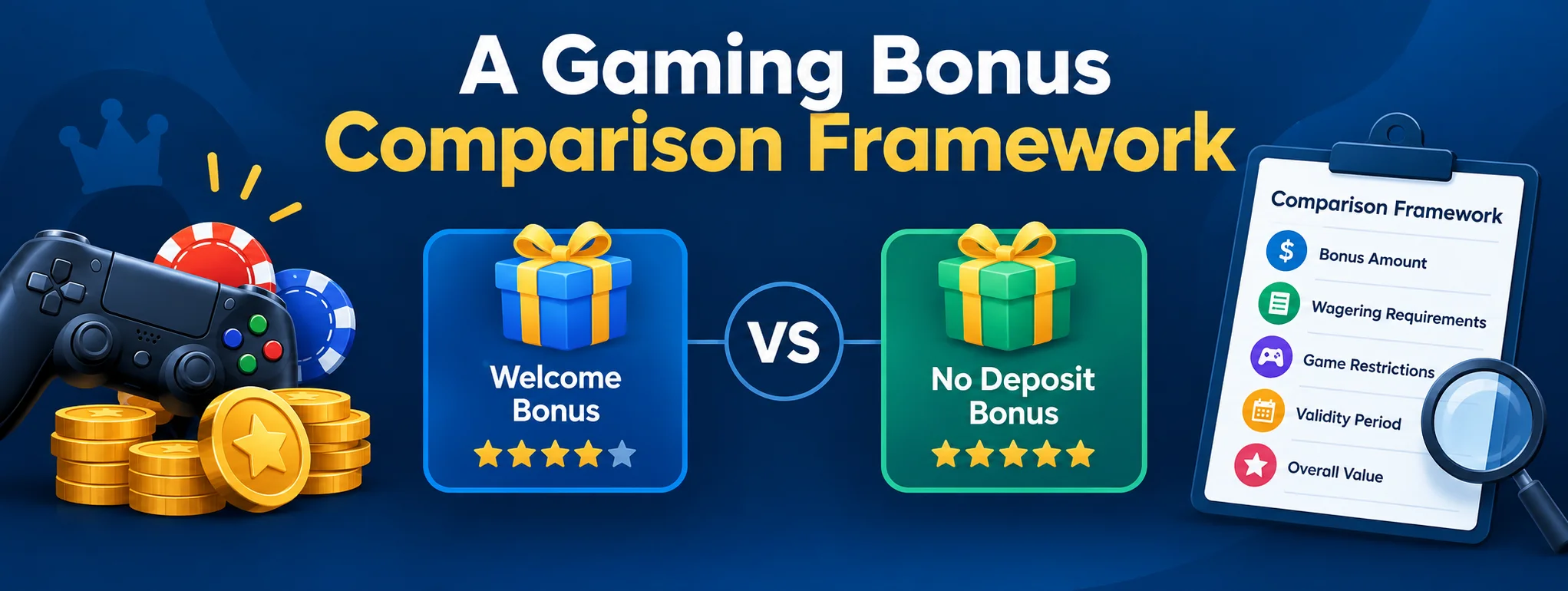
Gaming bonuses can look attractive at first glance, but comparing them fairly requires more than noticing a large percentage or a headline figure. A Gaming Bonus Comparison Framework gives players a structured way to examine bonus value, conditions, restrictions, and practical usability before deciding whether an offer deserves attention. Instead of focusing on the biggest advertised number, readers can use a consistent process to understand the real terms behind different promotions.
A useful comparison framework is especially valuable because gaming bonuses can differ significantly in wagering requirements, eligible games, maximum cash-out limits, time restrictions, and payment conditions. Looking at these details together creates a clearer picture and helps readers make informed choices.
Why a Structured Comparison Matters
Bonus offers are rarely identical. One promotion might provide a higher percentage match, while another may have fewer restrictions or a longer validity period. Comparing only the headline amount can therefore produce a misleading result.
A structured approach separates the important elements and examines each one independently. This makes it easier to identify the actual value of an offer rather than relying on promotional language.
The framework can also help readers recognize conditions that may affect how quickly a bonus can be used. Terms such as wagering requirements, qualifying deposits, eligible games, and withdrawal restrictions should be considered before accepting an offer.
Key Factors in A Gaming Bonus Comparison Framework
1. Bonus Value
Start with the basic value of the promotion. Determine whether the offer is a percentage match, a fixed amount, free spins, loyalty rewards, or another incentive.
The advertised maximum should not automatically be treated as the amount a player will receive. Deposit limits and qualifying conditions can affect the actual bonus amount.
2. Wagering Requirements
Wagering requirements indicate how much qualifying play may be required before bonus funds or related winnings become eligible for withdrawal.
For example, suppose a promotion provides a $50 bonus with a 20x wagering requirement based on the bonus amount. The resulting wagering target would be:
$50 × 20 = $1,000
This simple calculation shows why the headline bonus alone does not tell the complete story.
3. Eligible Games
Not every game necessarily contributes equally toward bonus requirements. Some promotions may exclude particular categories or assign different contribution rates.
Players should check the official terms to determine which games qualify and whether certain games contribute partially or fully toward any applicable requirements.
4. Expiration Period
A bonus with a short validity period may be harder to use than one with a longer window. The expiration date should therefore be considered alongside the wagering conditions.
A clear framework records the number of days available, when the countdown begins, and whether unused promotional funds expire automatically.
5. Withdrawal Conditions
Withdrawal rules can significantly affect the practical usefulness of a promotion. Relevant details may include minimum withdrawal amounts, maximum cash-out limits, identity verification, payment-method restrictions, or conditions attached to bonus winnings.
These terms should be reviewed before depositing or claiming an offer.
Five Details Worth Checking Before Comparing Offers
- Minimum deposit: Check how much must be deposited to qualify and whether different deposit levels produce different bonus amounts.
- Maximum bonus: Compare the actual achievable amount rather than assuming the advertised maximum applies to every qualifying deposit.
- Time limit: Record the exact period available to meet any stated conditions.
- Game restrictions: Review eligible games and contribution rates instead of assuming every game qualifies equally.
- Withdrawal rules: Look for limits or additional requirements that could affect access to funds or promotional winnings.
A Simple Comparison Table
A practical framework works best when the same categories are recorded for every promotion. The following format can be used as a comparison worksheet:
| Comparison factor | Offer A | Offer B | Offer C |
|---|---|---|---|
| Bonus format | Percentage match | Fixed bonus | Free spins |
| Maximum advertised value | $100 | $75 | 50 spins |
| Wagering requirement | 20x | 15x | 25x |
| Validity period | 14 days | 30 days | 7 days |
| Eligible games | Selected games | Most games | Slots only |
| Withdrawal conditions | Restrictions apply | Restrictions apply | Restrictions apply |
The purpose of the table is not to declare a universal winner. Instead, it creates a consistent format for examining differences and deciding which terms are most relevant to the reader’s own circumstances.
Example: Applying the Framework
Imagine two hypothetical offers.
Offer A provides a 100% match up to $100 with a 20x wagering requirement. A qualifying $100 deposit could produce a $100 bonus, creating a $1,000 wagering target if the requirement applies to the bonus amount.
Offer B provides a $60 bonus with a 10x requirement, creating a $600 target under the same calculation method.
Although Offer A advertises the larger bonus, Offer B has a smaller theoretical wagering target. Other factors could still change the comparison, including eligible games, expiration dates, deposit requirements, and withdrawal restrictions.
This example demonstrates why a single headline figure is insufficient. A complete assessment considers the entire set of terms.
How to Make Comparisons More Consistent
Consistency is one of the most useful principles in bonus research. Use the same checklist for every promotion and record the information before making a judgment.
It can also help to separate advertised value from usable value. Advertised value describes what the promotion claims to offer, while usable value considers the conditions attached to receiving and using it.
Readers should also verify current terms directly with the relevant gaming platform because promotional conditions can change. Regional eligibility may differ as well, particularly where gambling regulations vary by jurisdiction.
Responsible gaming should remain part of the comparison process. A bonus should never be treated as a reason to spend beyond a personal budget, and promotional terms should be understood before money is deposited.
Common Mistakes When Comparing Gaming Bonuses
One frequent mistake is focusing entirely on the percentage match. A 200% promotion may sound impressive, but restrictive terms can make the offer substantially different from its headline description.
Another mistake is overlooking the maximum qualifying amount. A high percentage applied to a small eligible deposit may produce less promotional value than expected.
Ignoring expiration dates can also create problems. Even a generous promotion may have limited practical value if its requirements must be completed within a short period.
Finally, readers sometimes compare bonuses without checking the full terms and conditions. Important details are often found outside the main promotional headline, making careful reading an essential part of the process.
Final Thoughts
A Gaming Bonus Comparison Framework turns a complicated promotional decision into a clearer evaluation process. By examining bonus value, wagering requirements, eligible games, expiration periods, and withdrawal conditions together, readers can understand the difference between an attractive headline and an offer with practical terms.
The strongest comparison is not necessarily the one with the biggest number. It is the one where the important conditions are clearly understood. Look beyond the headline, calculate the requirements, read the terms, and compare the complete offer.
FAQs
1. What should be compared first in a gaming bonus?
Start with the bonus amount, qualifying deposit, and wagering requirement. These provide an initial view of the promotion’s structure.
2. Why do wagering requirements matter?
They can determine how much qualifying play is required before certain bonus funds or related winnings become eligible for withdrawal.
3. Does a larger bonus always provide greater value?
No. A larger advertised bonus can come with higher wagering requirements, shorter validity periods, or additional restrictions.
4. Why should eligible games be checked?
Different games may have different contribution rules or may be excluded entirely. Checking eligibility helps prevent incorrect assumptions about meeting promotional conditions.
5. Can gaming bonus terms change?
Yes. Promotional terms can change over time and may also vary by jurisdiction. Readers should review the current official terms before accepting an offer.