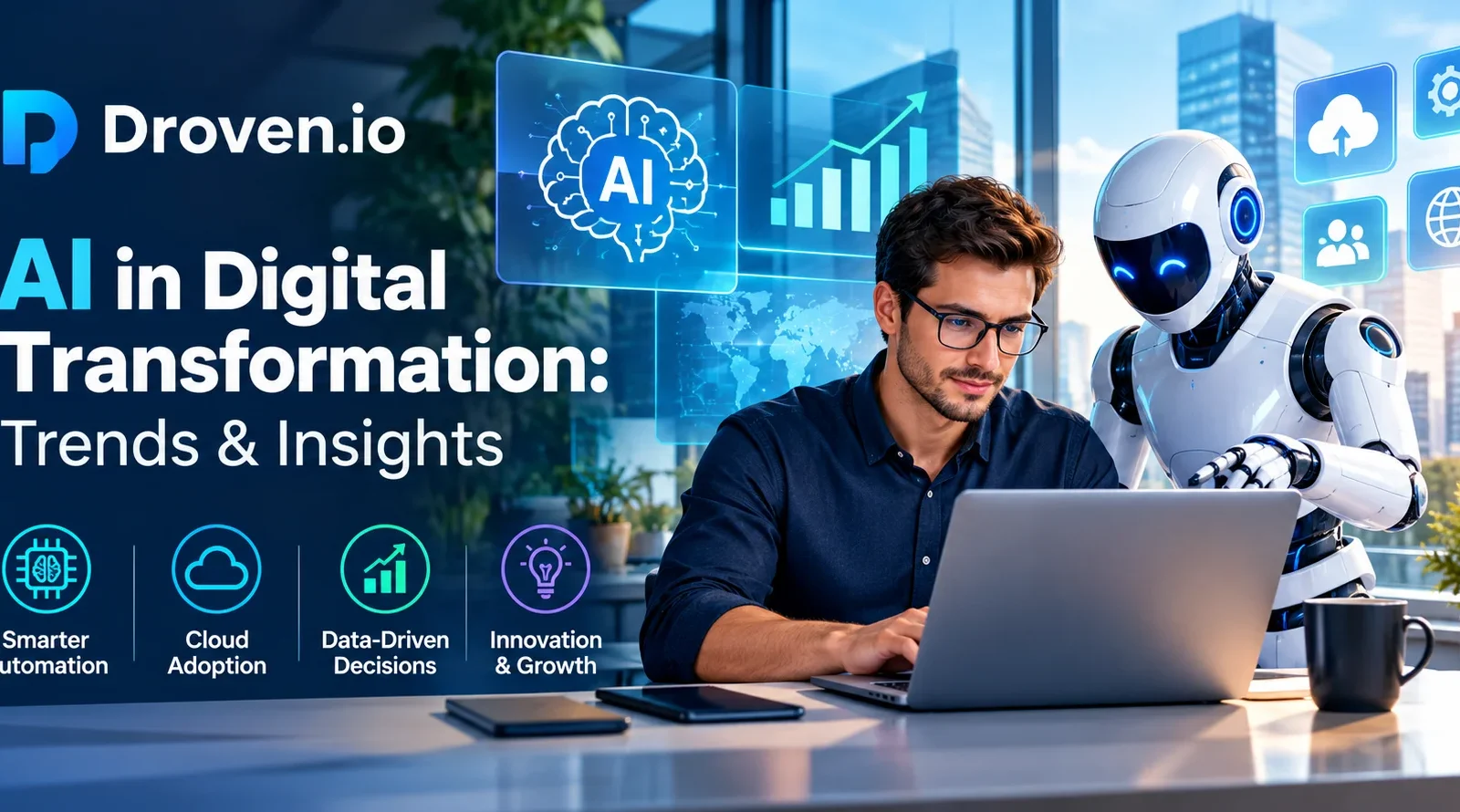
Artificial intelligence is changing how businesses operate, communicate, analyze information, and deliver services. From automated customer support to advanced data analytics, AI technologies are helping organizations improve efficiency and discover new opportunities. In this evolving digital environment, Droven.io AI in Digital Transformation represents a topic of interest for readers exploring the relationship between artificial intelligence, modern business strategies, and technological innovation.
Digital transformation is no longer limited to moving paper records into digital systems or adopting cloud-based software. It involves rethinking business processes, improving customer experiences, and using intelligent technologies to make better decisions. AI adds another important dimension by enabling organizations to analyze large amounts of information, recognize patterns, and automate repetitive activities.
Understanding Droven.io AI in Digital Transformation
Droven.io AI in Digital Transformation can be explored as a subject connecting artificial intelligence with the broader movement toward digital business innovation. However, the specific tools, services, and published initiatives associated with Droven.io should be verified through reliable information before attributing particular products or capabilities to the platform.
At a broader level, AI-driven digital transformation describes the integration of intelligent software into business operations. These systems can process information, support decision-making, improve workflows, and help organizations respond to changing market conditions.
Traditional digital tools often follow predefined instructions. AI-powered systems can go further by identifying patterns in data, generating content, interpreting language, and producing predictions based on available information. Their effectiveness depends on the quality of the data, the suitability of the technology, and the way organizations implement it.
Why AI Matters for Modern Businesses
AI offers several practical benefits when it is introduced with clear objectives. Companies can use intelligent tools to reduce administrative workloads, understand customer preferences, and identify operational problems earlier.
For example, a retail business may analyze purchasing patterns to improve inventory planning. A customer service department may use AI to categorize incoming requests and prepare responses. A manufacturing company may examine equipment data to identify potential maintenance requirements.
These applications demonstrate that AI is not simply a fashionable technology. It can become a valuable business resource when it addresses genuine operational needs.
The Connection Between AI and Digital Innovation
Digital transformation combines technology, people, processes, and organizational culture. AI contributes to this process by making digital systems more adaptive and capable of handling complex information.
Successful transformation requires more than purchasing new software. Businesses must establish clear goals, prepare employees, protect sensitive information, and evaluate whether new systems deliver meaningful improvements.
Key AI Trends Shaping Digital Transformation
The development of AI continues to influence how organizations approach productivity, customer relationships, and strategic planning. Several trends are particularly important for businesses exploring the next stage of digital growth.
| AI trend | Business application | Main benefit | Important consideration |
|---|---|---|---|
| Generative AI | Drafting content, summarizing reports, and assisting research | Faster content creation and knowledge access | Human review and accuracy |
| Predictive analytics | Forecasting demand and identifying patterns | Better planning and resource allocation | Reliable, representative data |
| Intelligent automation | Processing documents and routine requests | Reduced repetitive workloads | Monitoring exceptions |
| Conversational AI | Supporting customers through chat interfaces | Faster access to information | Privacy and response quality |
| AI-powered cybersecurity | Identifying unusual activity and potential threats | Earlier threat detection | False alarms and expert oversight |
| Personalized experiences | Tailoring recommendations and communications | More relevant customer interactions | Fairness and responsible data use |
These trends illustrate how AI can support different areas of an organization. The best option depends on business priorities, available resources, and the problems that require attention.
Generative AI and Knowledge Work
Generative AI tools can create drafts, summarize lengthy documents, organize information, and assist with brainstorming. Employees can use these capabilities to accelerate routine tasks and spend more time on complex responsibilities.
However, generated information may contain errors or unsupported claims. Human review remains essential, particularly when content affects legal, financial, medical, or other important decisions.
Predictive Analytics and Smarter Planning
Predictive analytics uses historical information and statistical or machine-learning techniques to estimate possible future outcomes. Businesses can apply these methods to demand forecasting, customer retention, maintenance planning, and resource management.
Predictions are not guarantees. Market disruptions, incomplete records, and changing customer behavior can reduce accuracy. Organizations should regularly evaluate their models and update them when circumstances change.
Intelligent Automation Across Workflows
AI-powered automation can assist with invoice processing, appointment scheduling, document classification, and internal support requests. Combining AI with existing business applications may reduce unnecessary manual work.
Nevertheless, automation should be designed around clear procedures. Sensitive decisions, unusual cases, and situations involving significant consequences may still require direct human involvement.
How Businesses Can Apply AI Successfully
Implementing AI effectively begins with understanding the problem rather than choosing technology first. A company should identify a specific process that needs improvement, establish a baseline, and select a suitable solution.
Start With Clear Business Objectives
Organizations should define what success means before launching an AI initiative. The objective might be to shorten response times, improve forecasting accuracy, reduce processing delays, or help employees find information more efficiently.
Clear targets make it easier to compare results before and after implementation. They also prevent businesses from investing in complicated systems that provide little practical value.
Prepare Data and Existing Systems
AI depends heavily on the information available to it. Inconsistent records, outdated databases, duplicated entries, and incomplete information can produce unreliable results.
Before deployment, businesses should review their data quality and establish appropriate access controls. They should also consider whether new tools can integrate with their existing software without creating unnecessary complexity.
Train Employees and Encourage Adoption
Employees need to understand how AI tools work, where their limitations exist, and when human judgment is necessary. Training can help teams use these systems responsibly while reducing confusion and resistance.
Organizations should encourage staff to report errors and suggest improvements. This feedback creates a stronger implementation process and helps businesses adapt their tools to real working conditions.
The Benefits of AI-Driven Digital Transformation
AI can create meaningful opportunities when its capabilities align with an organization’s needs. The benefits are not automatic, but careful implementation can support sustainable improvements.
Improved Productivity and Efficiency
Automating repetitive tasks allows employees to devote more attention to planning, communication, creative work, and complex problem-solving. AI assistants may also help teams summarize information and prepare initial drafts more quickly.
Efficiency gains should be measured alongside accuracy and quality. A faster process is not necessarily better if it creates additional errors or requires extensive corrections.
Better Customer Experiences
AI can help businesses understand common customer questions, organize feedback, and provide relevant recommendations. Conversational systems may also offer support outside standard business hours.
Companies should maintain clear ways for customers to reach human representatives when an automated system cannot resolve their concerns. Accessibility, privacy, and accurate communication should remain priorities.
More Informed Decision-Making
AI-powered analysis can help managers recognize trends that might otherwise remain hidden in large datasets. These insights may support marketing decisions, operational planning, and customer service improvements.
Decision-makers should treat AI outputs as evidence to evaluate rather than unquestionable answers. Combining analytical results with professional experience and contextual understanding usually produces more balanced decisions.
Greater Flexibility and Innovation
Businesses that develop strong digital capabilities may respond more effectively to changing customer demands and emerging opportunities. AI can support experimentation by helping teams compare alternatives, analyze feedback, and develop new ideas.
This flexibility depends on organizational readiness, responsible governance, and the ability to learn from unsuccessful experiments.
Challenges and Risks Businesses Should Consider
Although AI provides exciting possibilities, its adoption also introduces technical, ethical, and operational concerns. Understanding these challenges helps organizations build realistic strategies.
Data Privacy and Security
AI systems may process confidential business records, employee information, or customer details. Organizations must determine what information can be shared with a tool and how that information is stored and protected.
Access controls, appropriate contracts, security reviews, and clear data-handling policies can reduce exposure. Employees should avoid submitting confidential information to systems that have not been approved for that purpose.
Accuracy and Algorithmic Bias
AI systems can produce incorrect information or reflect biases present in their training data. These problems may affect recommendations, predictions, and automated decisions.
Businesses should test systems before deployment, monitor their performance, and establish procedures for correcting errors. High-impact decisions deserve stronger human oversight and more careful evaluation.
Implementation Costs and Integration
AI projects can involve subscription fees, technical development, employee training, data preparation, and ongoing maintenance. Older systems may also require additional work before they can support new capabilities.
A limited pilot project can help an organization estimate costs and identify technical problems before committing to a larger rollout.
Responsible Use and Accountability
Companies need clear rules governing the use of AI-generated content and automated decisions. Employees should understand which tasks require approval, how mistakes should be reported, and who is responsible for reviewing important outputs.
Transparency and accountability help maintain trust among employees, customers, and business partners.
Practical Strategies for Building an AI-Ready Business
Organizations do not need to transform every department at once. A phased approach can make adoption easier to manage and evaluate.
The following five strategies provide a useful starting point:
- Identify high-value opportunities: Select repetitive or information-heavy tasks where AI could produce measurable improvements.
- Begin with a pilot project: Test the technology with a small team before expanding it across the organization.
- Establish data governance: Define rules for data quality, privacy, security, and authorized access.
- Invest in employee training: Teach staff how to use AI effectively, verify outputs, and recognize limitations.
- Measure results continuously: Track productivity, accuracy, customer satisfaction, operating costs, and potential risks.
These actions help businesses move beyond experimentation toward practical and responsible implementation. They also provide a framework for evaluating emerging platforms and services, including those discussed in relation to Droven.io AI in Digital Transformation.
The Future of AI in Digital Transformation
The future of digital transformation will likely involve deeper connections between AI assistants, enterprise software, analytics platforms, and automated workflows. Rather than using separate tools for isolated tasks, organizations may increasingly coordinate multiple systems to support complete business processes.
More Personalized and Context-Aware Services
Businesses may use AI to adapt digital experiences to customer preferences, previous interactions, and current needs. When implemented responsibly, personalization can make services more relevant and convenient.
Organizations must still respect privacy and avoid collecting information without an appropriate purpose. Personalization should improve customer experiences without becoming intrusive.
Human-AI Collaboration
AI is likely to remain most useful when its capabilities complement human judgment. Machines can help process information and identify patterns, while people contribute creativity, empathy, ethical reasoning, and contextual understanding.
This relationship may change job responsibilities and create demand for new technical and analytical skills. Continuous learning will therefore become increasingly important.
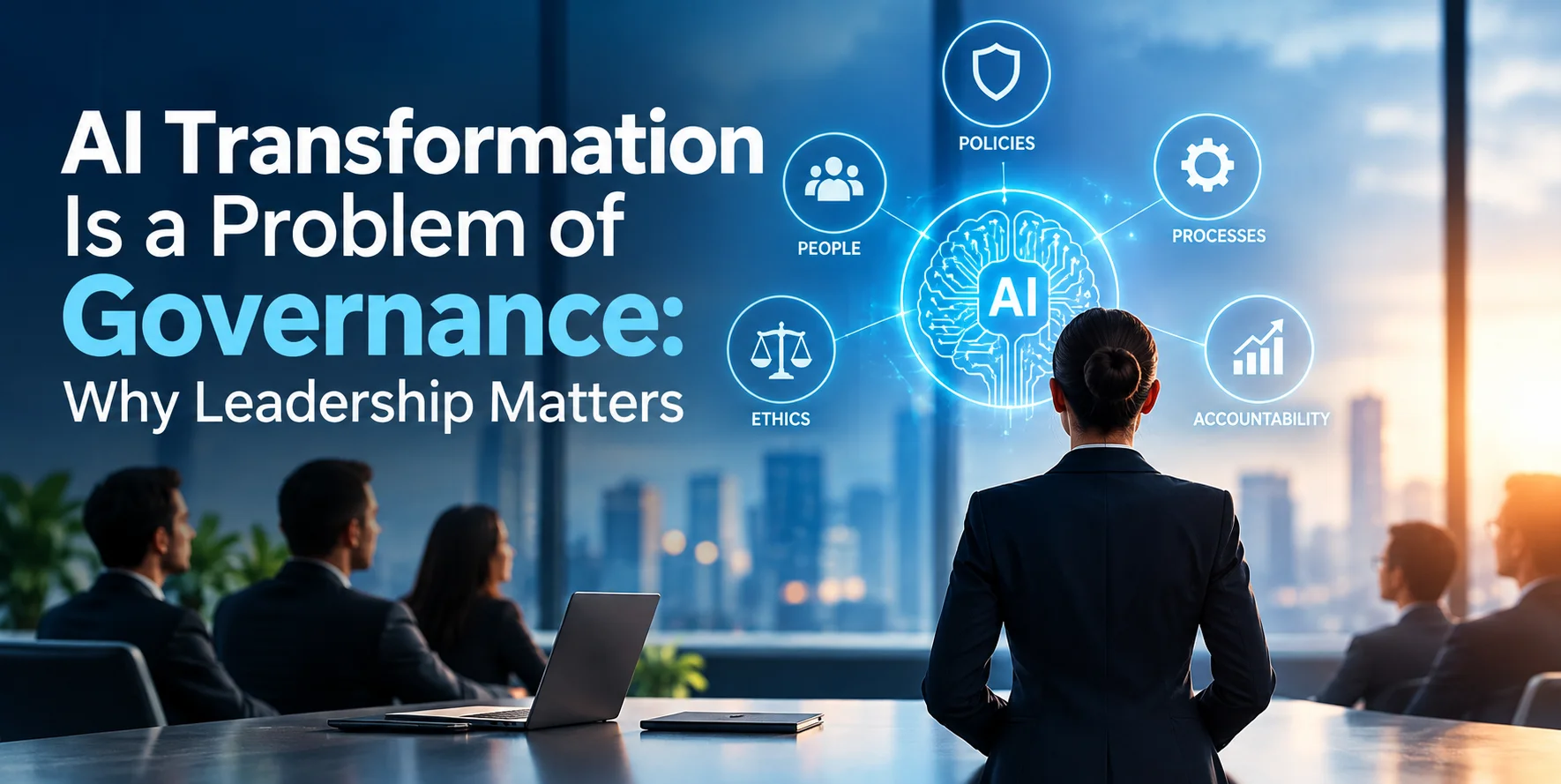
Stronger Governance and Evaluation
As AI becomes more integrated into business operations, organizations will need more structured processes for testing, monitoring, and reviewing automated systems.
Future success will depend not only on technological sophistication but also on reliability, security, transparency, and responsible decision-making. Businesses that build these principles into their digital strategies may be better prepared for long-term change.
Frequently Asked Questions
1. What does Droven.io AI in Digital Transformation mean?
It refers to the topic of exploring AI within digital transformation in connection with Droven.io. Specific platform capabilities should be confirmed through reliable documentation.
2. How does AI support digital transformation?
AI can automate repetitive tasks, analyze data, improve customer support, and help businesses make more informed decisions.
3. Which industries can benefit from AI-driven transformation?
Industries such as retail, healthcare, manufacturing, education, finance, and logistics can use AI for suitable operational and analytical tasks.
4. What are the main challenges of adopting AI?
Common challenges include data privacy, inaccurate outputs, implementation expenses, integration difficulties, and employee training.
5. How can a business begin using AI?
A business can start by identifying one practical problem, testing an appropriate tool, training employees, and measuring the results before expanding its use.
Final Thoughts
Droven.io AI in Digital Transformation highlights an important area of modern business discussion: the growing relationship between artificial intelligence and digital innovation. AI can help organizations improve productivity, analyze information, enhance customer experiences, and explore new ways of working. However, these opportunities must be balanced with careful planning, reliable data, employee education, and responsible technology management.
Businesses should focus on solving genuine problems instead of adopting AI simply because it is popular. Starting with manageable projects, evaluating measurable outcomes, and maintaining human oversight can create a more dependable path toward digital progress.